
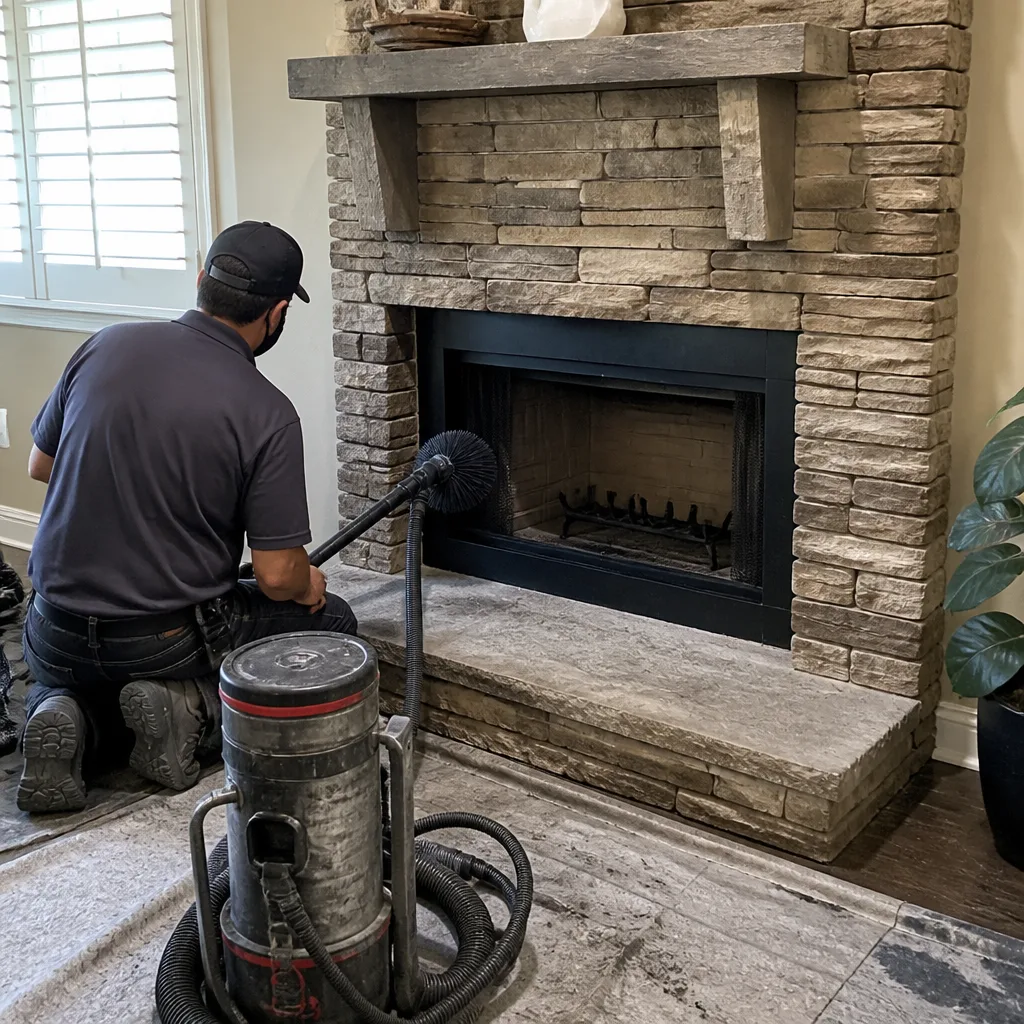
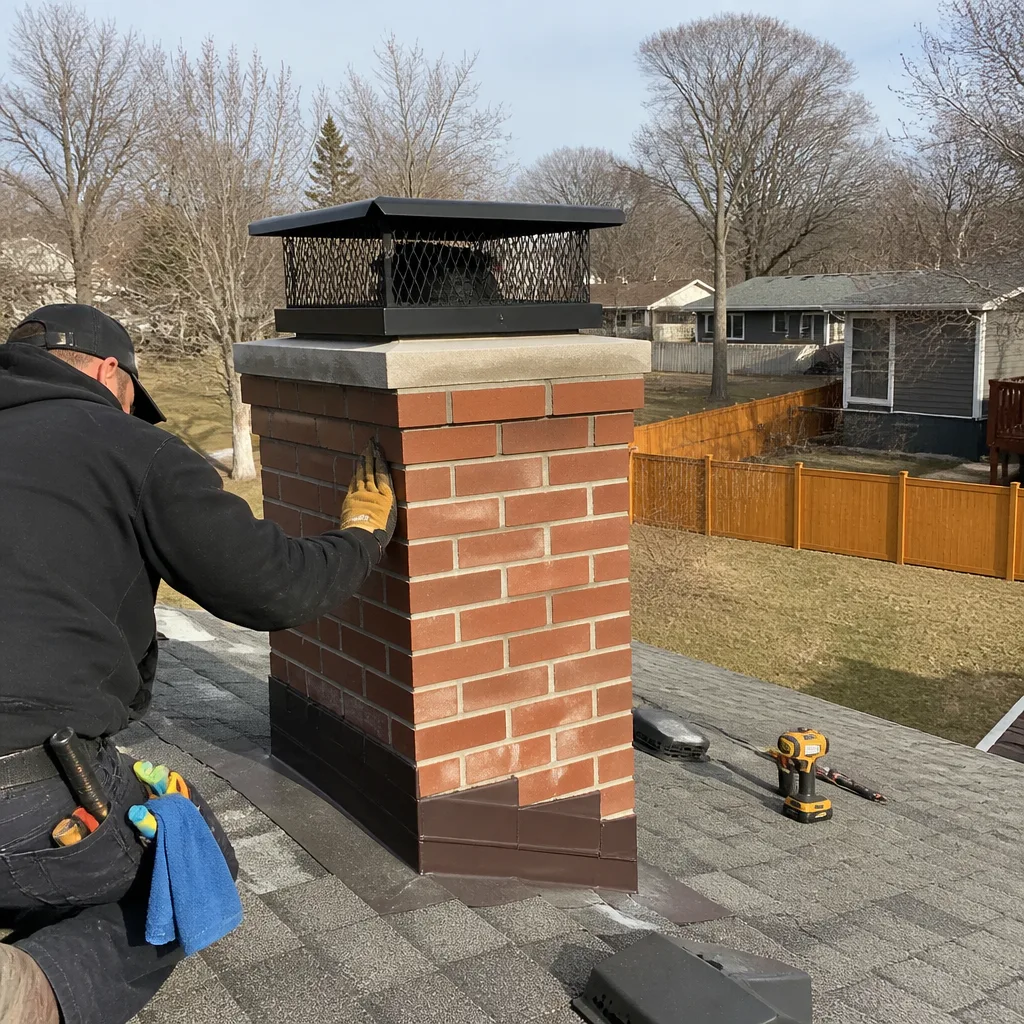
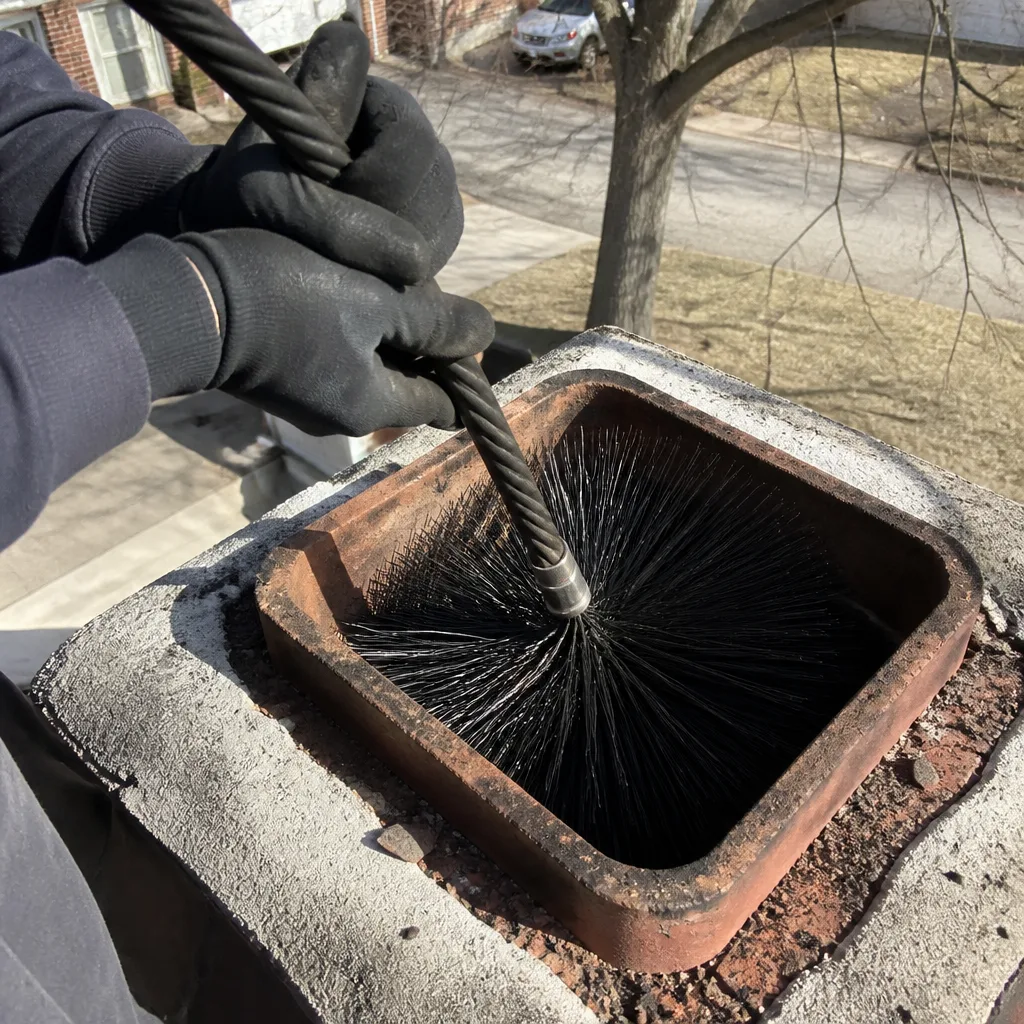
Level 1 sweep and inspection to the NFPA 211 annual standard - flue, crown, cap, and flashing checked and photographed
Chimney sweep logs do not sweep chimneys. They loosen some creosote - which then falls where a brush and vacuum still have to collect it.
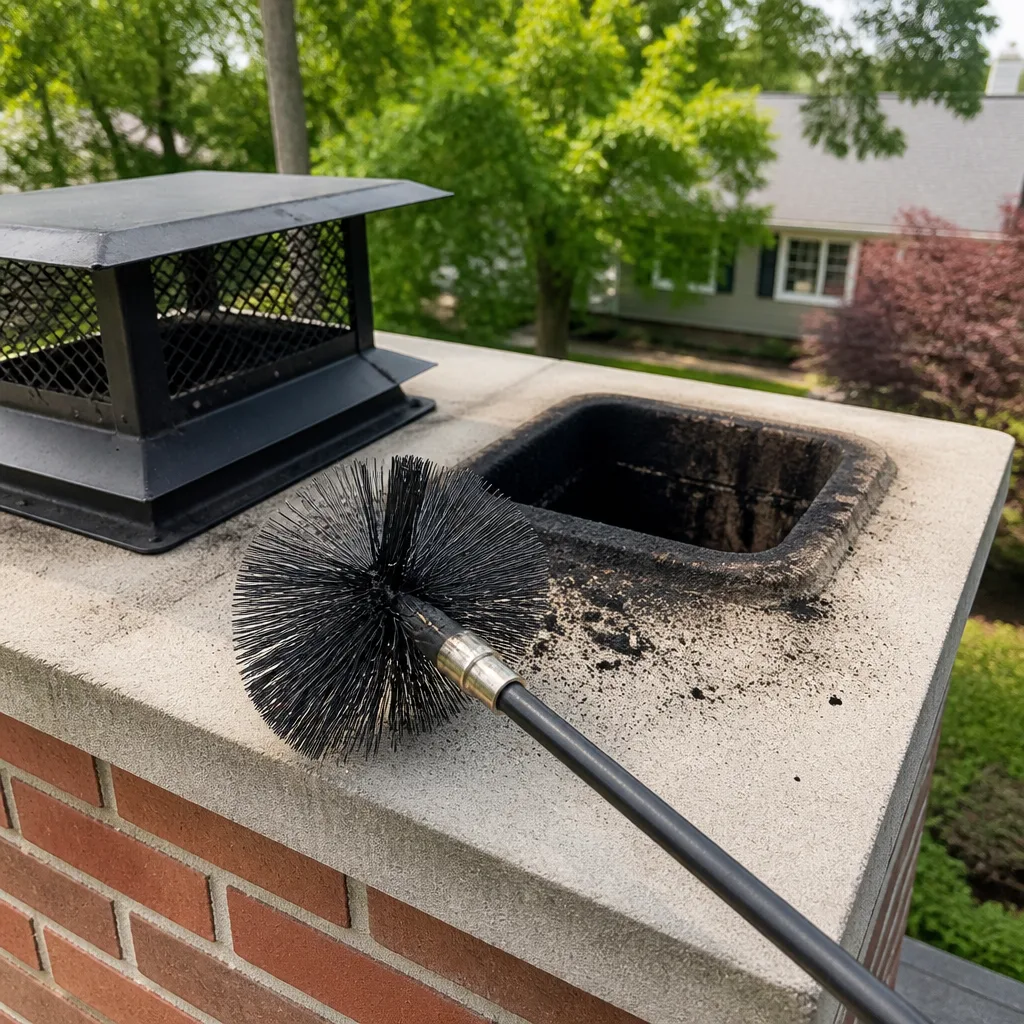
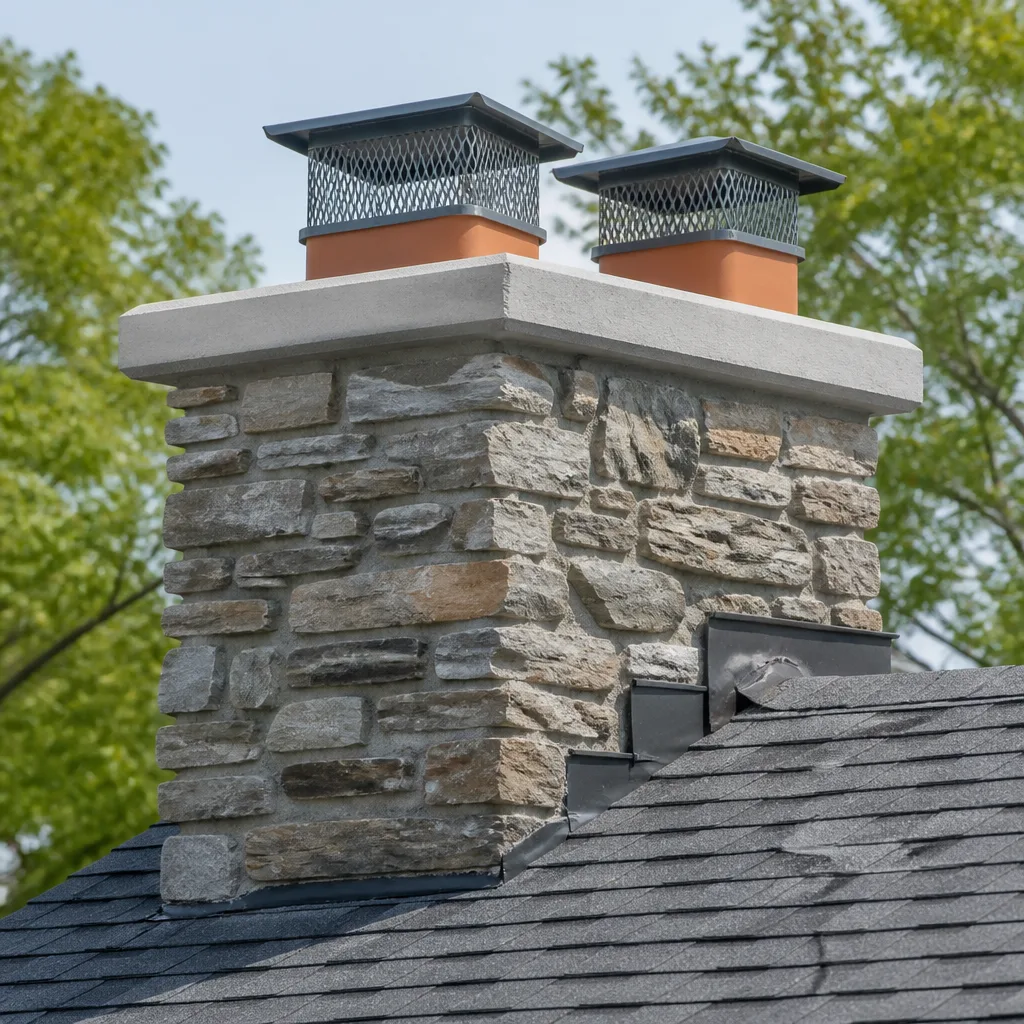
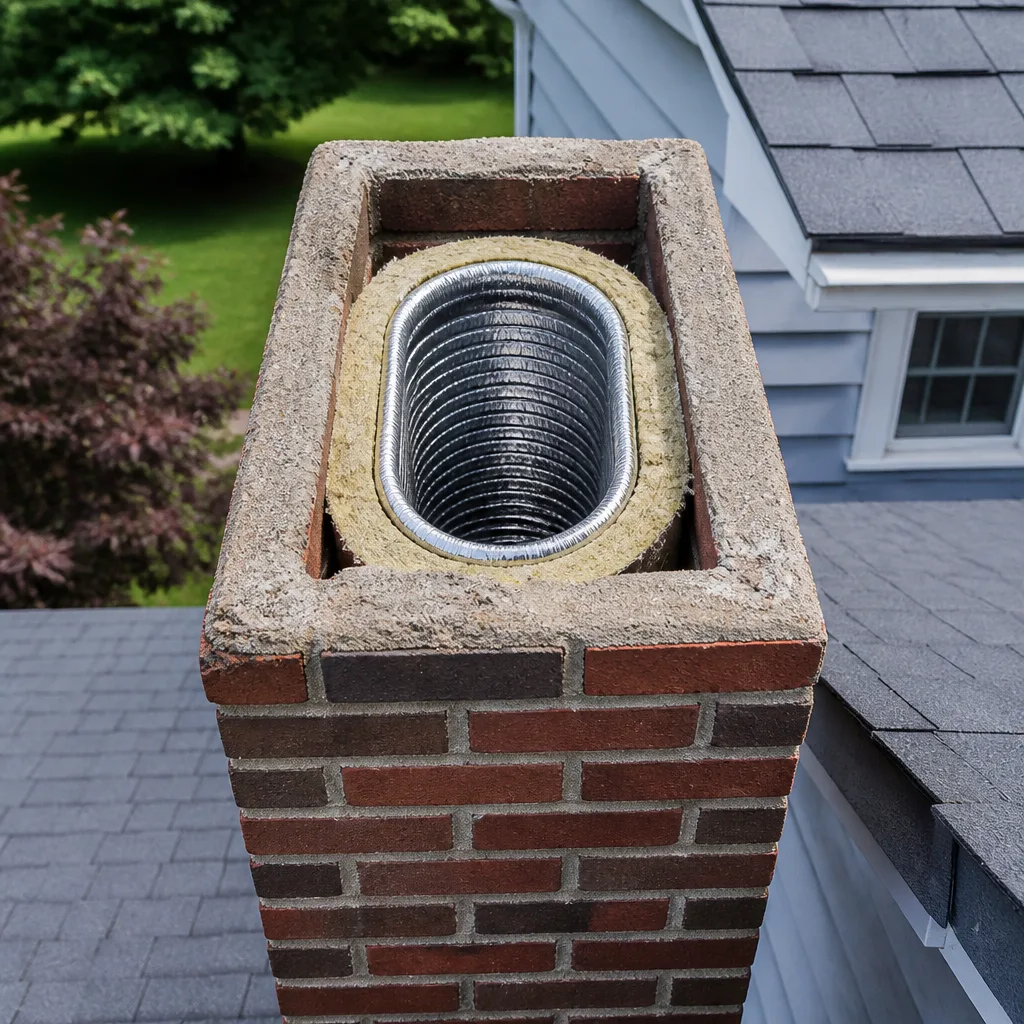
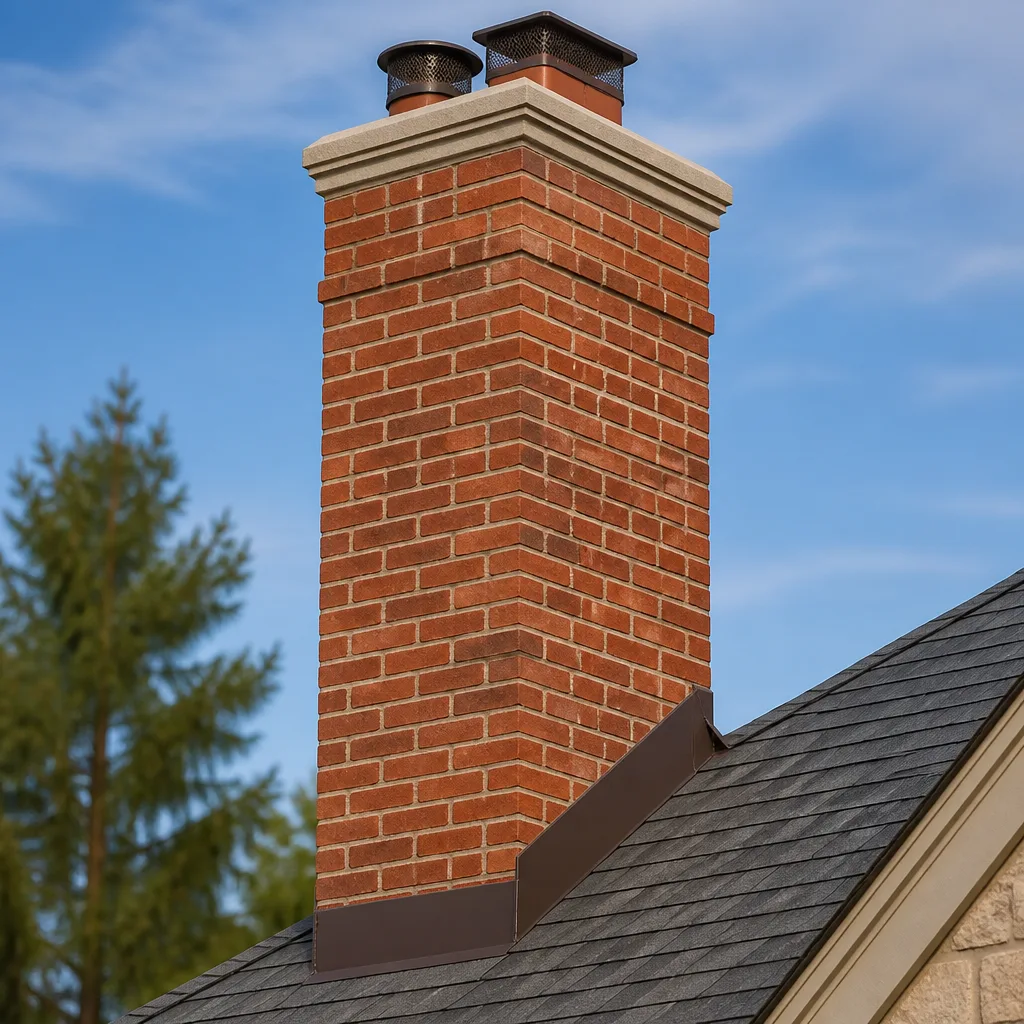
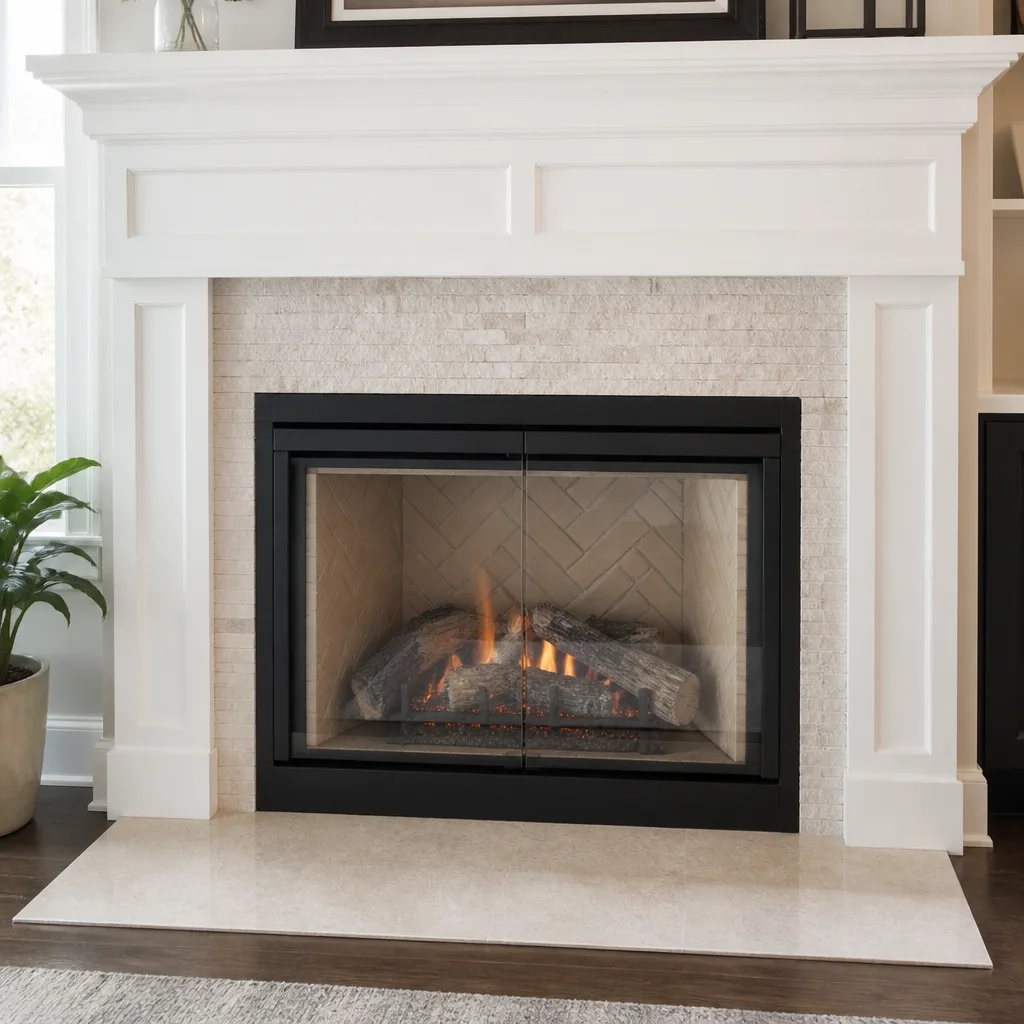
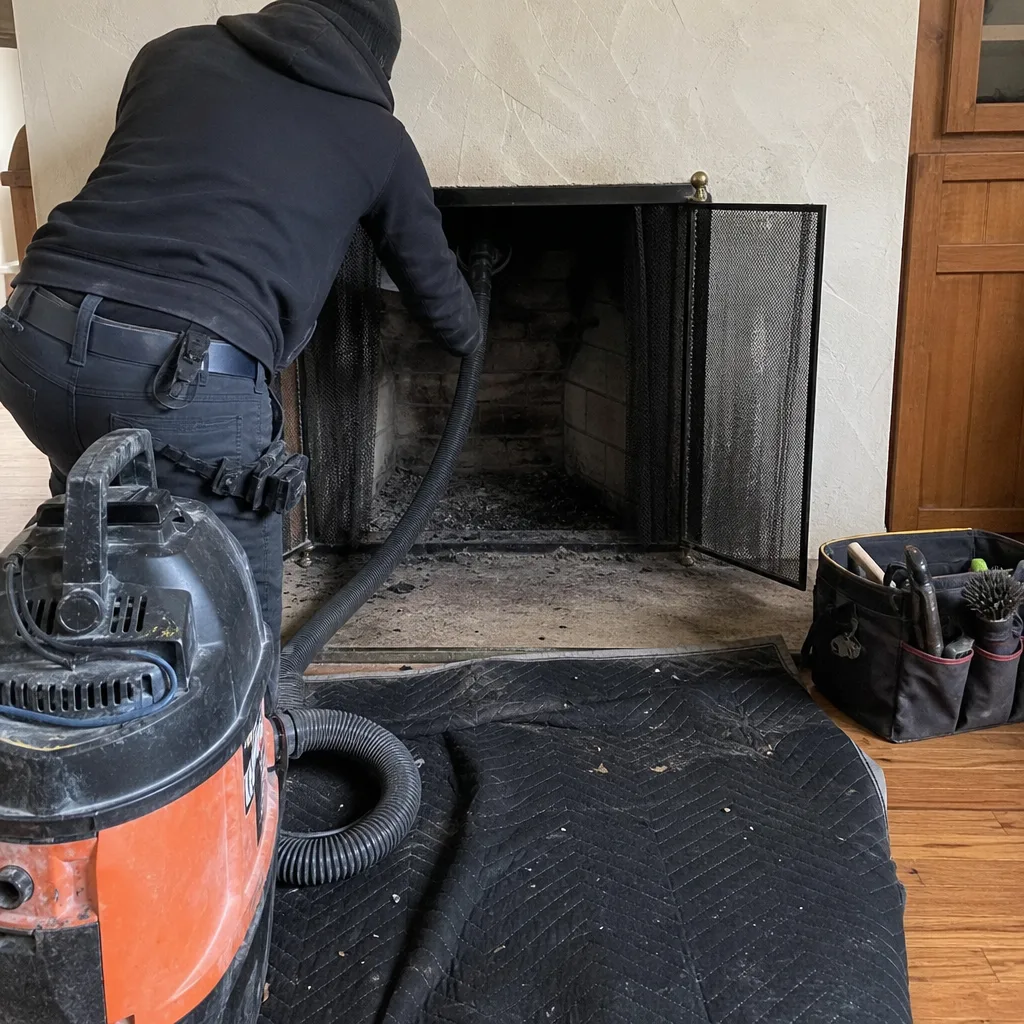 Before
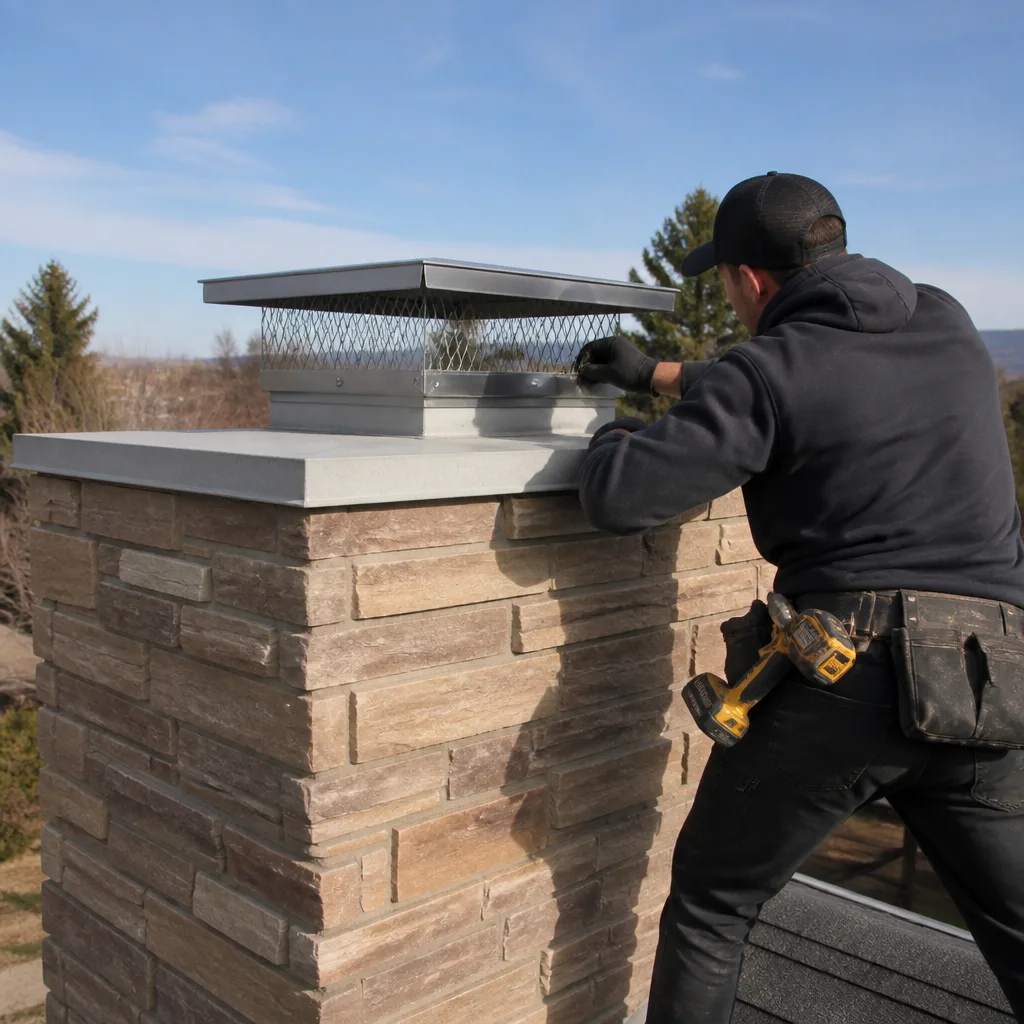 After
After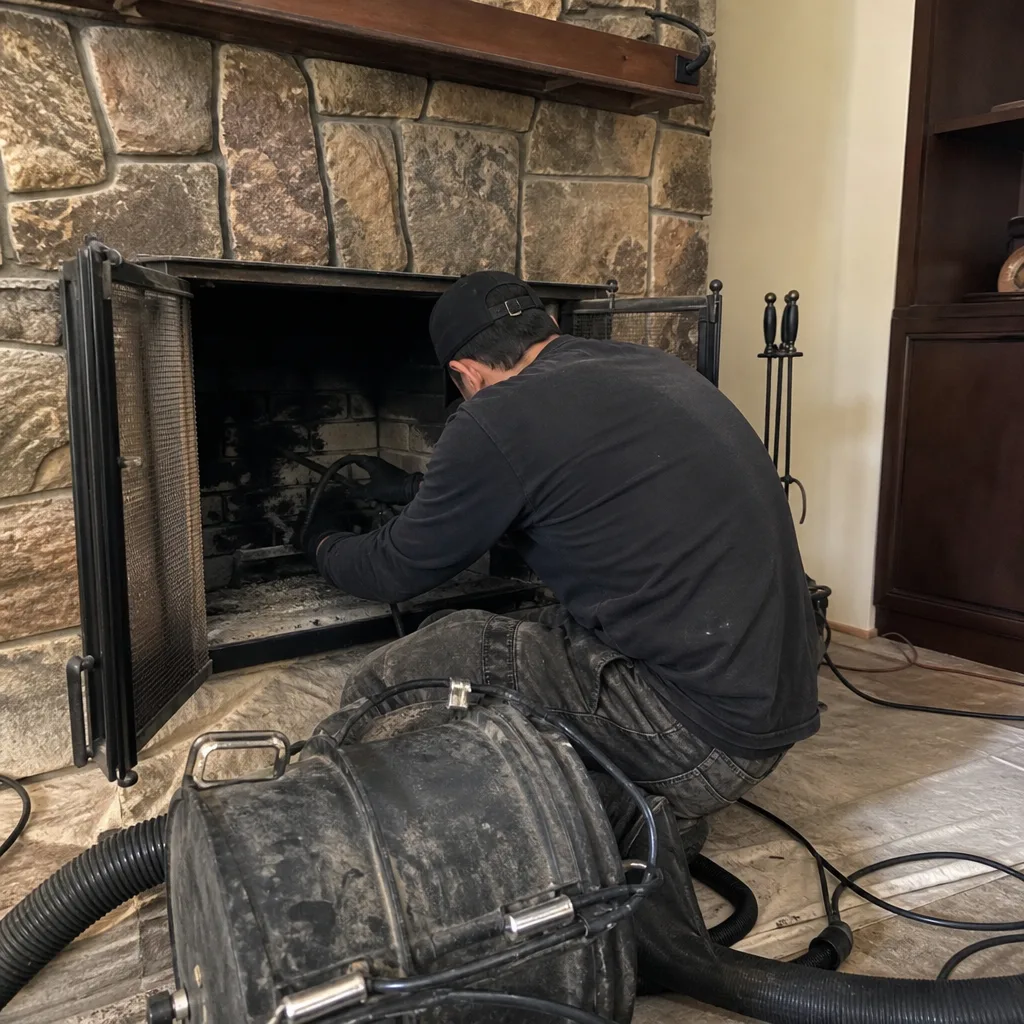 Before
 After
After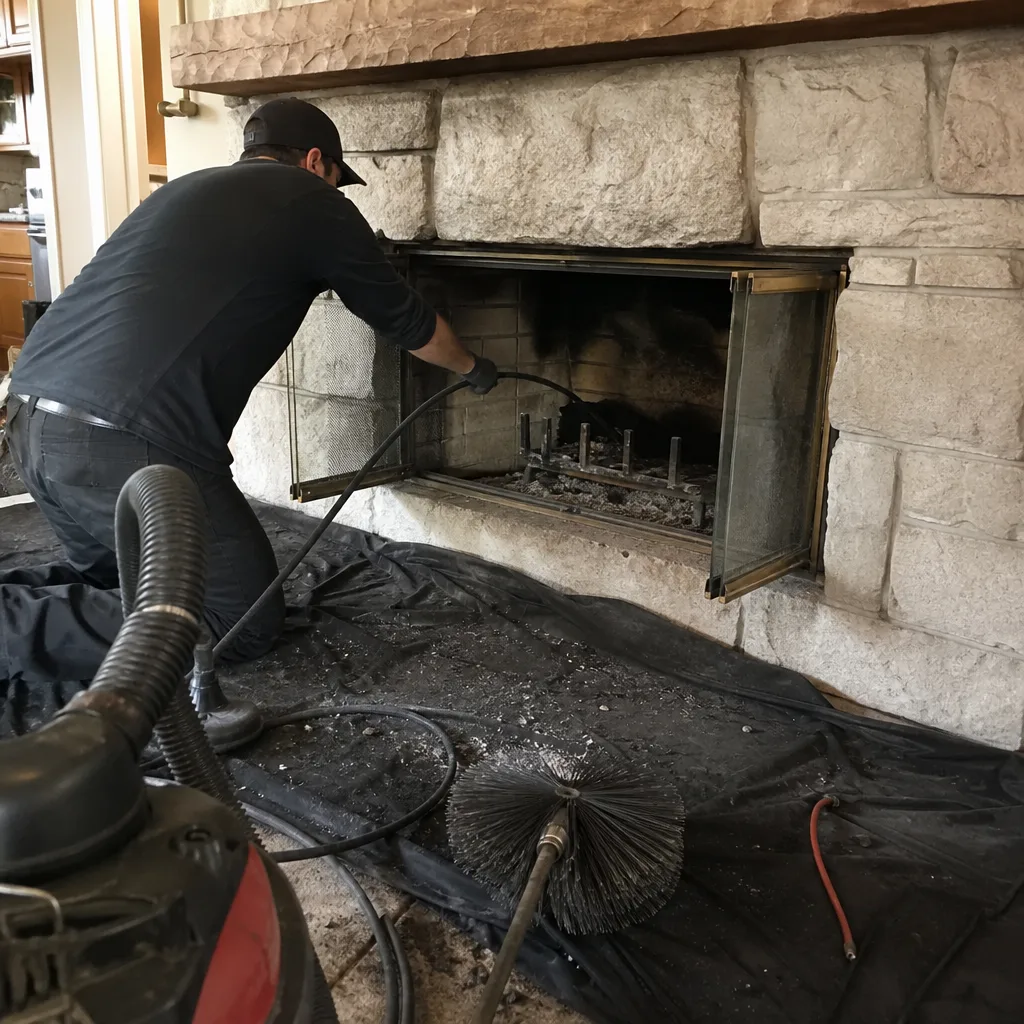 Before
 After
AfterMortar Repointing in Denver, CO
Mortar repointing in Denver typically costs between $350 and $1,800 depending on chimney height, the number of courses affected, and how far the deterioration has progressed. Most jobs are completed in a single visit, and every quote is written before a tool touches the brick. If you want a number today, call (720) 674-7312 – a live person answers every call, around the clock.
Repointing (sometimes called tuckpointing, though that term gets used loosely in the trades) is the process of cutting out failing mortar joints and packing them with fresh compound that bonds to the surrounding masonry. The goal is straightforward: stop water from finding a path into the chimney structure. Denver’s freeze-thaw cycle does more damage to mortar joints than almost anything else a chimney faces. A joint that looks slightly recessed in October can be a quarter-inch-wide channel by March. Water gets in, freezes, expands, and the brick face begins to flake – a process called spalling – and once spalling starts, the repair bill climbs fast.
Level Two Chimney Denver has documented this exact pattern across more than 38,000 chimney inspections and cleanings since 2009. Our work on mortar falls under the broader scope of Chimney Repair in Denver, and every repointing job gets the same protocol: a written price before work starts, a camera-scan inspection under NFPA 211 Level 2 standards, and a documented photo record when the job is done. Corrine Halstead built the company around evidence, not reassurance, and that shows up most clearly in how we handle structural masonry work.
When You Need Mortar Repointing
Mortar doesn’t announce itself. Most homeowners in Denver don’t discover joint deterioration until a Level 2 camera inspection shows water staining inside the flue, or until efflorescence (white salt deposits) appears on the brick exterior. Here are the specific signs that point to a repointing job rather than a minor patch:
- Recessed or crumbling joints. Run your finger along the mortar line between bricks. If it crumbles out easily or sits more than 3/16 of an inch behind the brick face, the joint has lost its weather seal. This is the most common finding in Denver homes built between 1950 and 1985, particularly in Capitol Hill, Park Hill, and Hilltop where the brick chimneys are original to the structure.
- Efflorescence on the exterior chimney chase. White or grayish salt staining on the brick face means water has been moving through the joints, dissolving minerals from the masonry, and depositing them on the surface as it evaporates. The staining itself isn’t the problem – it’s evidence that the problem already exists inside.
- Spalling brick faces. When mortar joints fail and water infiltrates, the freeze-thaw cycle forces the face of the brick to pop off in layers. Once spalling starts, you’re dealing with both a mortar and a brick replacement problem. Catching deteriorating joints before spalling begins saves significant money.
- Water in the firebox or smoke chamber after rain. If you’re finding water inside the firebox and the cap checks out, open joints in the upper courses of the chimney are the most likely entry point. This is a frequent finding in Washington Park and Wash Park West, where mature trees create moisture-heavy microclimates around chimneys.
- Cracks tracking along mortar lines, not through bricks. A crack that follows the joint pattern rather than cutting through the brick is almost always a mortar failure. Cracks that run through the brick body itself suggest a different structural issue and warrant a full camera inspection before any repair work begins.
- Failed prior repairs that used the wrong mortar mix. This is more common in Denver than most homeowners expect. Pre-mixed big-box mortar is often too hard for older brick chimneys. When a rigid Type S or Type N mix is applied to soft historic brick, the brick itself becomes the weak point and cracks under thermal movement. We see this regularly on repointing jobs in Curtis Park and Five Points, where some of the city’s oldest residential masonry lives.
Our Mortar Repointing Process
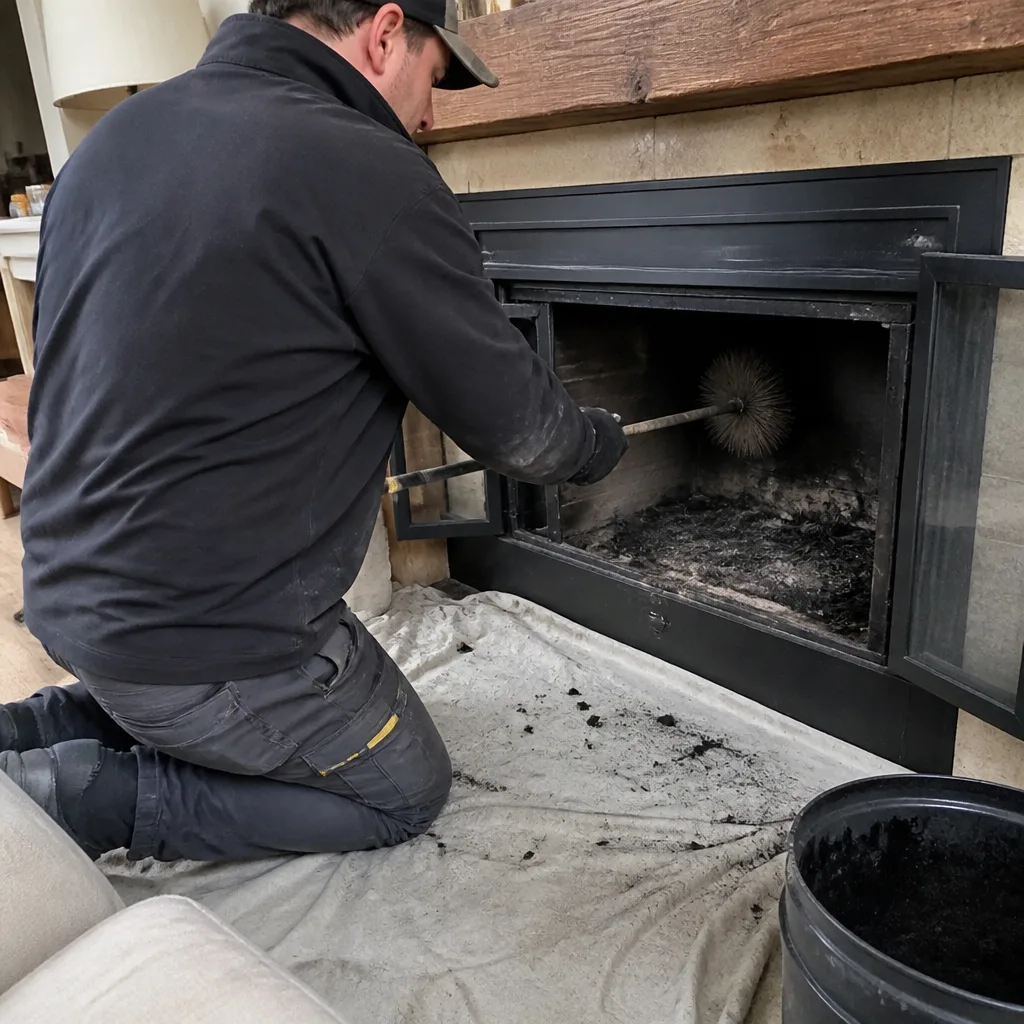
Repointing done right is not fast work, and it’s not something you want rushed. The process below is what every Level Two Chimney Denver repointing job looks like, from the first look to the final photo record.
- NFPA 211 Level 2 camera inspection before any work is scoped. We send a camera down the flue and document the condition of the liner, smoke chamber, and firebox before we quote mortar work. This matters because deteriorating joints are often accompanied by liner damage, and quoting repointing alone without checking the liner means the homeowner could pay for a visible repair while a hidden problem gets worse. The camera footage becomes part of your documented record under Clause 4 of the Haven Standard.
- Written price, written scope, written warranty – before anyone starts. After the inspection, we hand you a written quote with a line-item breakdown. The price on that paper is the price you pay. This is Haven Standard Clause 1: have it in writing. If the scope changes because we uncover additional damage once work begins, we stop, show you what we found, and write a new line before continuing.
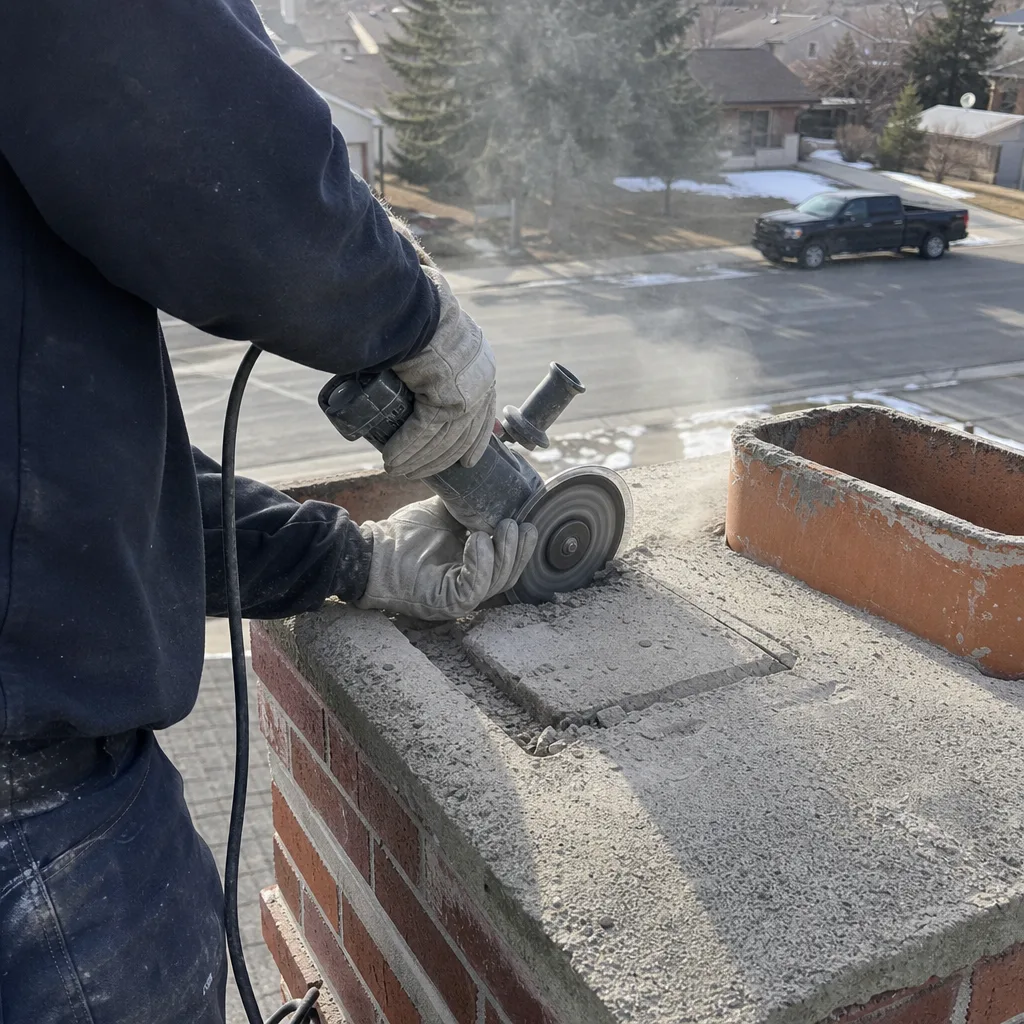
- Joint preparation – grinding and cutting to proper depth. Failing mortar is ground out to a minimum depth of 3/4 inch, and usually 1 inch on chimney exposure joints. Anything shallower doesn’t give new mortar enough surface area to bond correctly. This step determines whether the repair holds for two years or twenty.
- Mortar mix matched to the existing brick hardness. This step is where many contractors skip and many repairs fail. Older Denver brick – common in homes built before 1960 – typically requires a softer Type O or custom lime-based mix. Harder mixes cause the brick face to crack over subsequent winters because the brick can’t flex against the stiffer joint. We match the mortar hardness and color to the existing masonry. Materials are sourced through our procurement network, which includes suppliers like Olympia Chimney, specifically so we’re not defaulting to whatever the nearest hardware store stocks.
- Application, tooling, and cure management. Fresh mortar is packed in layers, tooled to match the existing joint profile (typically a concave or weathered finish on Denver residential chimneys), and kept damp during the cure window. In summer, that means shading the work. In spring and fall – when Denver temperatures swing 40 degrees between morning and afternoon – we use appropriate admixtures and schedule work around freeze forecasts.
- Final photo record and written warranty delivered to the homeowner. Every completed repointing job gets a documented photo set showing the repaired joints, the surrounding masonry condition, and the cap and crown as-left. That file is yours to keep – useful for insurance documentation, home sale disclosure, or simply knowing what was done and when.
 Before
 After
AfterMortar Repointing Pricing in Denver
Mortar repointing in Denver runs between $350 and $1,800 for most residential chimneys. The range is wide because the variables are real – here’s what actually moves the number.
| Scope of Work | Typical Price Range |
|---|---|
| Single-story chimney, minor joint deterioration (1-2 courses) | $350 – $550 |
| Two-story chimney, moderate joint failure (4-6 courses) | $600 – $950 |
| Full chimney repointing, significant joint loss across multiple faces | $950 – $1,800 |
| Repointing combined with crown repair or cap replacement | $900 – $2,200 |
| Historic or soft brick requiring custom mortar mix | Add $150 – $350 to base estimate |
A few factors specific to Denver that affect where your job lands in these ranges:
- Chimney height and roof pitch. Denver has a lot of steep-pitch roofs – particularly in Hilltop, Crestmoor, and the Platt Park neighborhoods. High chimneys on pitched roofs require additional staging time and, in some cases, specific equipment. Safety on a steep roof is not a place to cut corners; our technicians are trained for it, but the setup time is real and it affects cost.
- Number of exposed faces. A chimney with four fully exposed faces above the roofline costs more to repoint than one that’s partially enclosed or set into a wall. Freestanding chimney stacks common in mid-century Denver ranches often have maximum exposure on all four faces.
- Extent of deterioration found during inspection. If the camera scan reveals liner cracks or smoke chamber damage alongside the joint failure, we’ll quote those repairs separately. We don’t bundle them to inflate the repointing quote, and we don’t hide them to win the initial work order.
- Mortar match complexity. Matching color and texture on historic brick chimneys in Curtis Park or Potter-Highlands adds labor time. The alternative – mismatched mortar that stands out visually and doesn’t perform correctly – isn’t something we’re willing to deliver.
Every estimate from Level Two Chimney Denver is free and written. If you’ve already received a written estimate from another company, bring it to us. We offer a free second opinion on any written estimate, and if their scope is accurate and their price is fair, we’ll tell you so.
FAQs – Mortar Repointing
How long does repointed mortar last in Denver’s climate?
Properly matched and applied mortar on a Denver chimney typically lasts 20 to 30 years before it needs attention again. The key phrase there is “properly matched” – mortar that’s too hard for the brick it’s applied to can begin failing within three to five winters because the differential expansion during Denver’s temperature swings cracks either the joint or the brick face. That’s why mortar hardness selection isn’t a detail we leave to a tech’s judgment on the day of the job – it’s specified in the written scope before work starts. Call (720) 674-7312 if you’re unsure whether a past repointing job used the right mix.
Is repointing something a homeowner can do as a DIY project?
Accessible joints on a ground-level garden wall, yes – the stakes are low and the internet has decent tutorials. A chimney is different on two counts. First, the height and roof-pitch access makes it genuinely dangerous without proper staging – we see injury-related calls every spring from people who tried to handle it themselves. Second, the mortar selection and application on a chimney that faces Denver’s freeze-thaw cycle requires getting the mix right, or the repair fails prematurely. We don’t give step-by-step instructions for chimney repointing for the same reason a cardiologist doesn’t walk you through doing your own procedure: the risk of getting it wrong is significant. What you can do is visually inspect accessible joints from the ground with binoculars and call us if you see recession or crumbling.
What’s the difference between repointing and tuckpointing?
Repointing is the accurate trade term for cutting out deteriorated mortar and replacing it with fresh material. Tuckpointing technically refers to a specific decorative technique – two contrasting mortar colors, with a thin raised line of putty in the center – developed in England in the 18th century to simulate fine stone joinery. In practice, most Denver contractors use the terms interchangeably to mean mortar joint repair. When you call us, we’ll ask you to describe what you’re seeing and we’ll use the camera to document what’s actually there – the terminology matters less than the written scope of work you receive before anything starts.
Do I need a full chimney inspection before repointing, or can you just repair the joints?
We don’t quote repointing without a camera inspection first, and here’s the practical reason: mortar joint failure is almost always a symptom of water infiltration, and water doesn’t confine itself to the exterior. A camera scan routinely reveals liner damage, smoke chamber spalling, or crown deterioration alongside the joint failure. If we patch the exterior joints without checking the flue interior, we’ve treated one entry point for water while leaving others open – and you’ll be calling our Chimney Repair services again in two years. The inspection is included in the visit, the findings go into your documented photo record, and the price we quote reflects the full picture. That’s how we’ve operated since 2009.
Why Denver Chimneys Need Repointing More Often Than You’d Expect
Denver sits at 5,280 feet with a semi-arid climate that gets roughly 300 days of sunshine per year. That combination produces temperature swings that are harder on masonry than a wetter, more temperate city. On a clear February day, a south-facing chimney face can move from 15 degrees Fahrenheit at sunrise to 55 degrees by early afternoon. The mortar joint expands and contracts with every swing. Over years, that movement opens micro-cracks that the next rain or snowmelt fills – then freezes, expands, and widens.
The neighborhoods where we see the highest rate of mortar deterioration relative to chimney age are, predictably, the older dense districts: Congress Park, Whittier, Sunnyside, and the Berkeley neighborhood in northwest Denver. Many of those chimneys were built with soft historic brick that requires lime-based mortar mixes – not the Type S products that are easiest to buy at a supply house. Getting that detail wrong is expensive, and it’s one of the reasons we source materials specifically through suppliers like Olympia Chimney and Gelco rather than defaulting to whatever ships fastest.
Denver also sits in a hail corridor. Heavy hail events – and Denver gets them regularly through the spring and early summer – can dislodge already-loose mortar fragments and accelerate deterioration that was progressing slowly. If your chimney took a hail season without being inspected in the last two years, the joints are worth a look.
The Written Record You Walk Away With
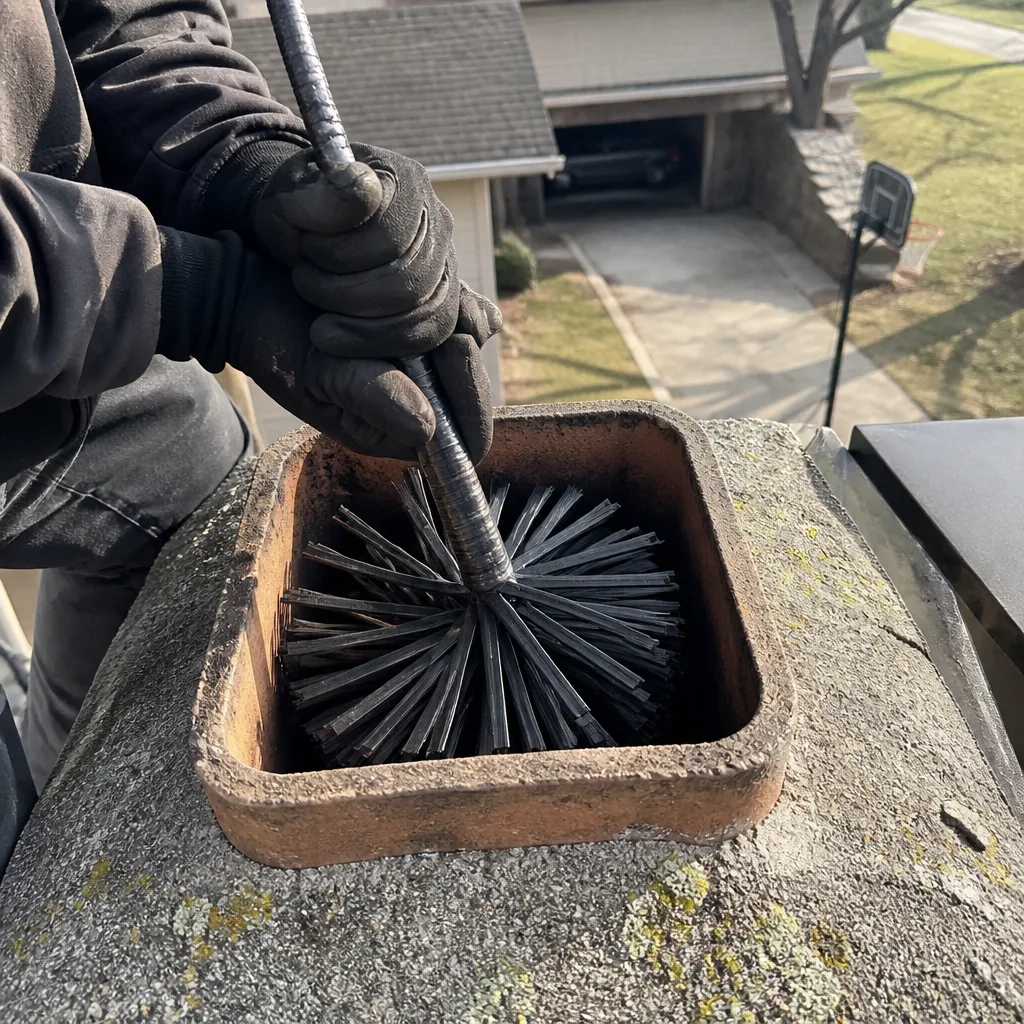
When a Level Two Chimney Denver repointing job is complete, here’s the documentation you have in hand:
- The original written scope and price you approved before work started
- Camera-scan footage and photos from the pre-work inspection, showing flue liner condition, smoke chamber, crown, and cap
- Post-repair photos of the repointed joints and surrounding masonry
- Written warranty on the repair, with specific terms – not a general satisfaction statement
- The mortar mix specification used, so any future contractor working on the chimney knows what they’re matching
That file is useful for more than peace of mind. Insurers increasingly ask for documented chimney inspection history. Home buyers and their agents routinely request it during disclosure. And if a problem appears within the 365-Day Done Right Promise window – if the repair doesn’t hold, if something was missed, if the work wasn’t right – that written record is the basis for making it right at no additional cost.
This is what Clause 4 of the Haven Standard means in practice: the photo record isn’t an optional upgrade or a premium service tier. It’s standard on every job, because the alternative is asking a homeowner to take a contractor’s word for what was done and what condition things were left in. We don’t think that’s an acceptable trade.
Key Takeaways
- Mortar repointing in Denver typically costs $350 to $1,800 depending on chimney height, number of affected courses, and mortar mix requirements – written price before work starts, always.
- Denver’s freeze-thaw cycle and temperature swings make mortar joint failure more common here than in milder climates, particularly in older brick neighborhoods like Capitol Hill, Curtis Park, and Sunnyside.
- Mortar mix hardness must match the brick; using a mix that’s too hard on historic brick causes the brick face to crack within a few winters.
- A camera inspection before quoting is non-negotiable – exterior joint failure almost always has an interior component that changes the scope.
- Every job comes with a written price, documented photo record, and 365-Day Done Right Promise.
- Free second opinion on any written estimate, no conditions attached.
Get a Written Price for Mortar Repointing in Denver
If you’re seeing recessed joints, white staining on the brick, or water inside the firebox after rain, the right next step is a camera inspection and a written quote – not a guess. Level Two Chimney Denver covers all of metro Denver and the surrounding area, and our home base is set up for same-area scheduling so most inspections happen within a few days of your call.
Call (720) 674-7312 to schedule. Someone answers every call – no voicemail, no web form, no call-back queue. We’ll confirm a time, send you a text when the technician is on the way, and arrive with the camera ready. The inspection and written quote are the starting point, and the price on that quote is the price of the work.
Written by Corrine Halstead, Owner at Level Two Chimney Denver, serving Denver.