
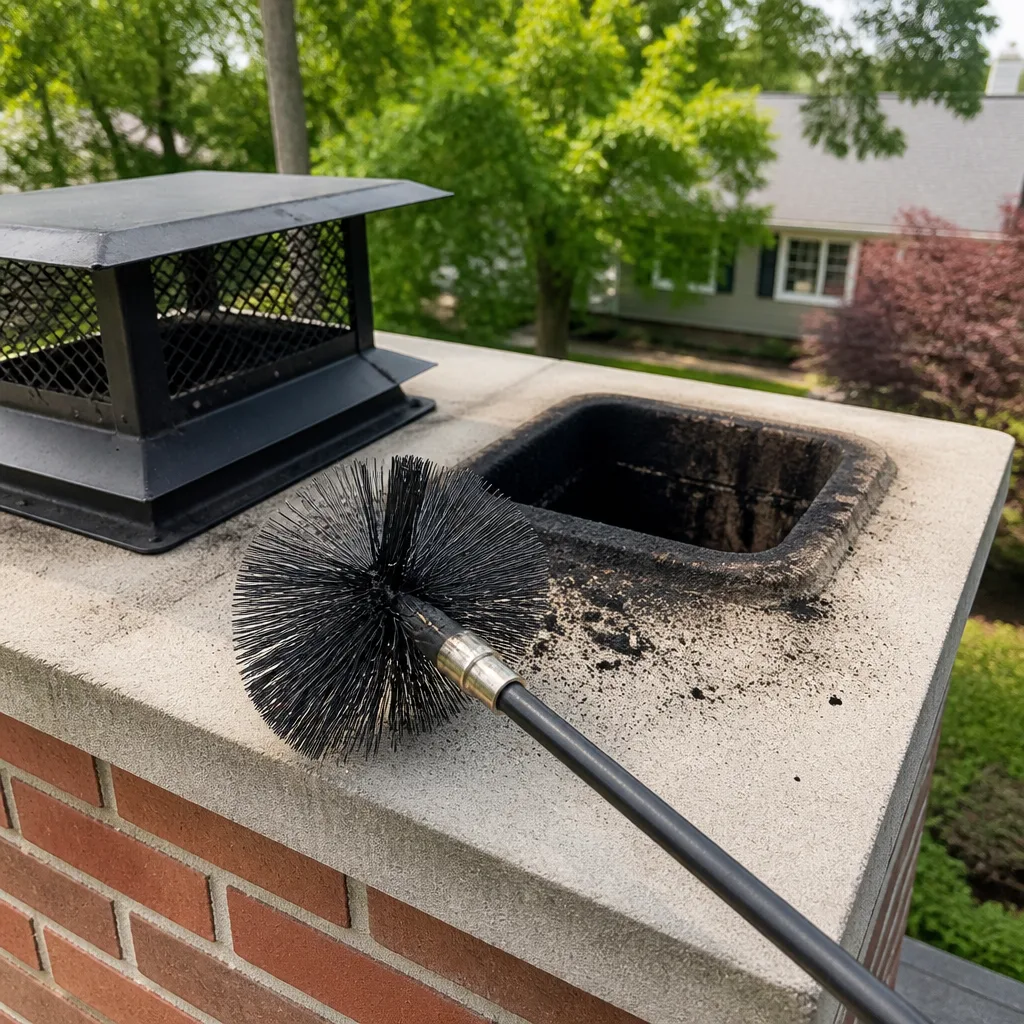
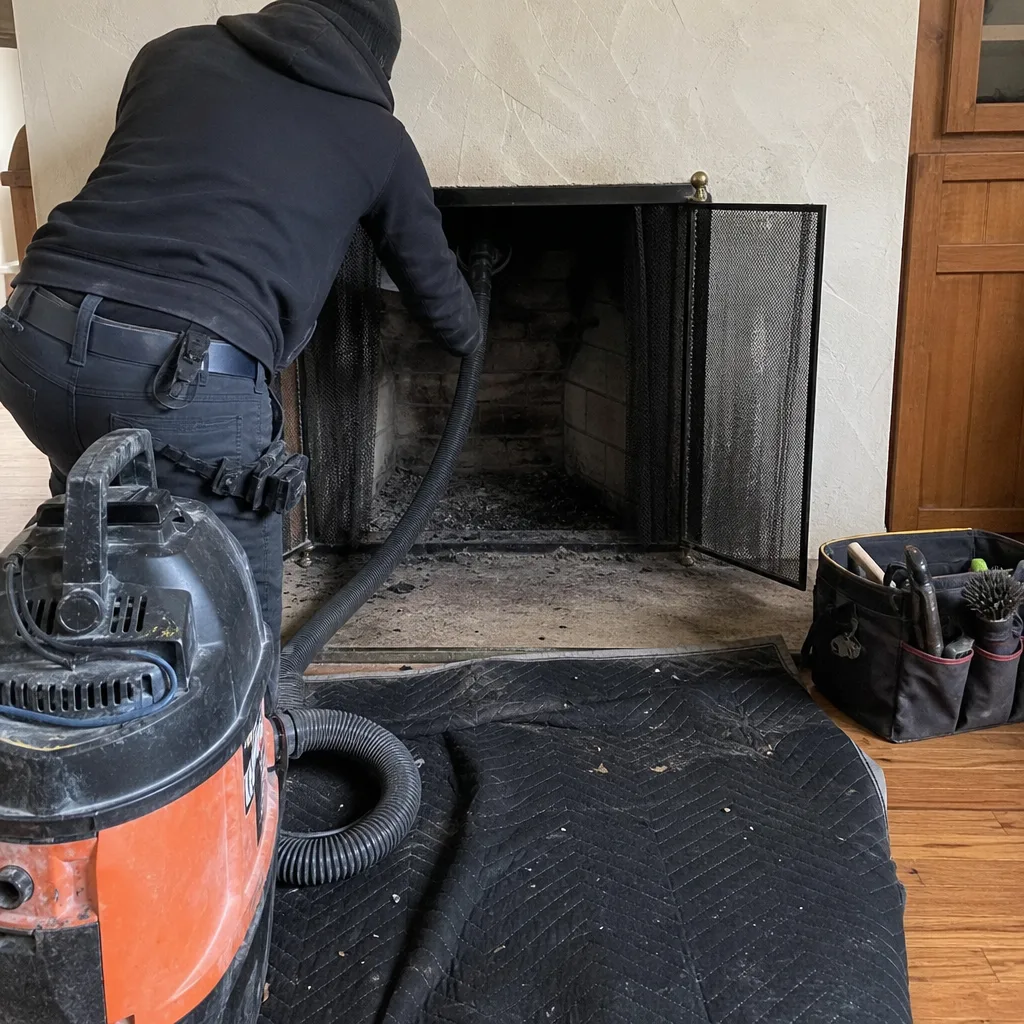
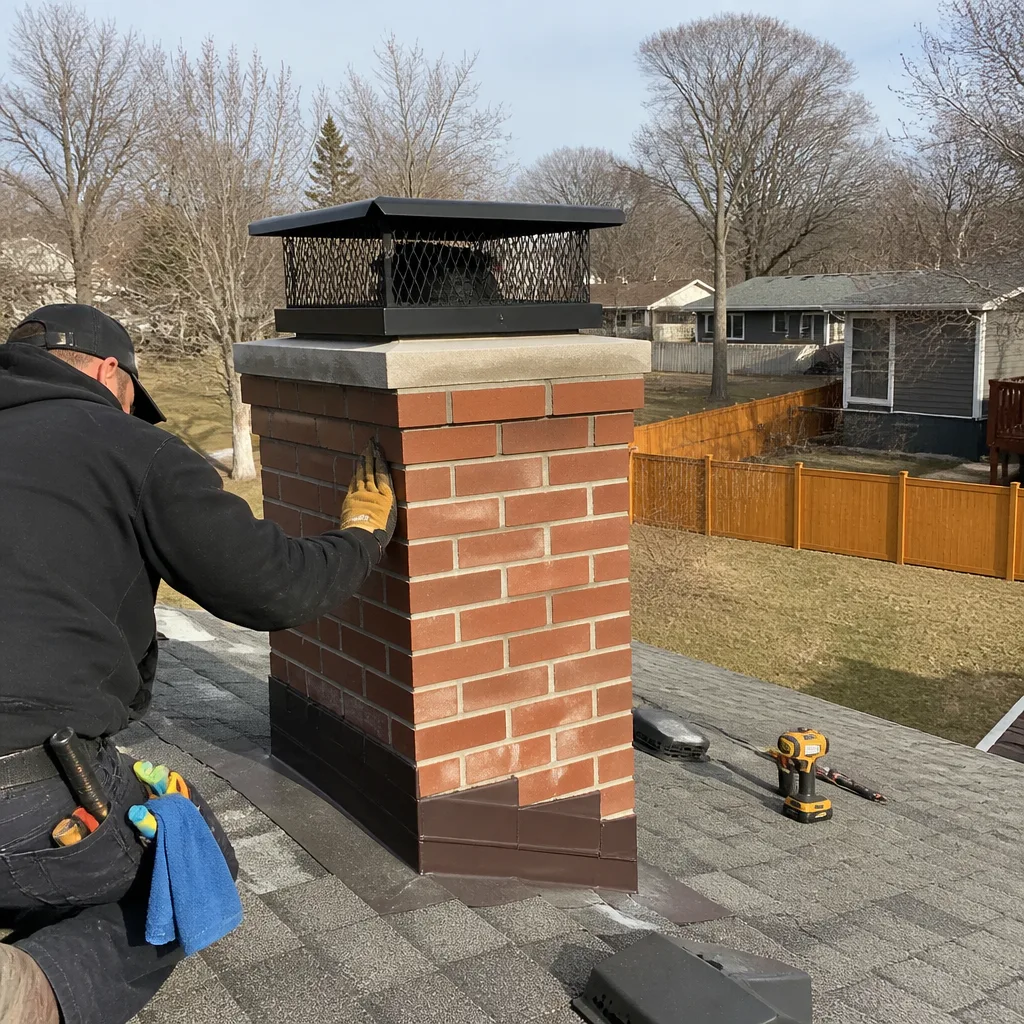
Level 1 sweep and inspection to the NFPA 211 annual standard - flue, crown, cap, and flashing checked and photographed
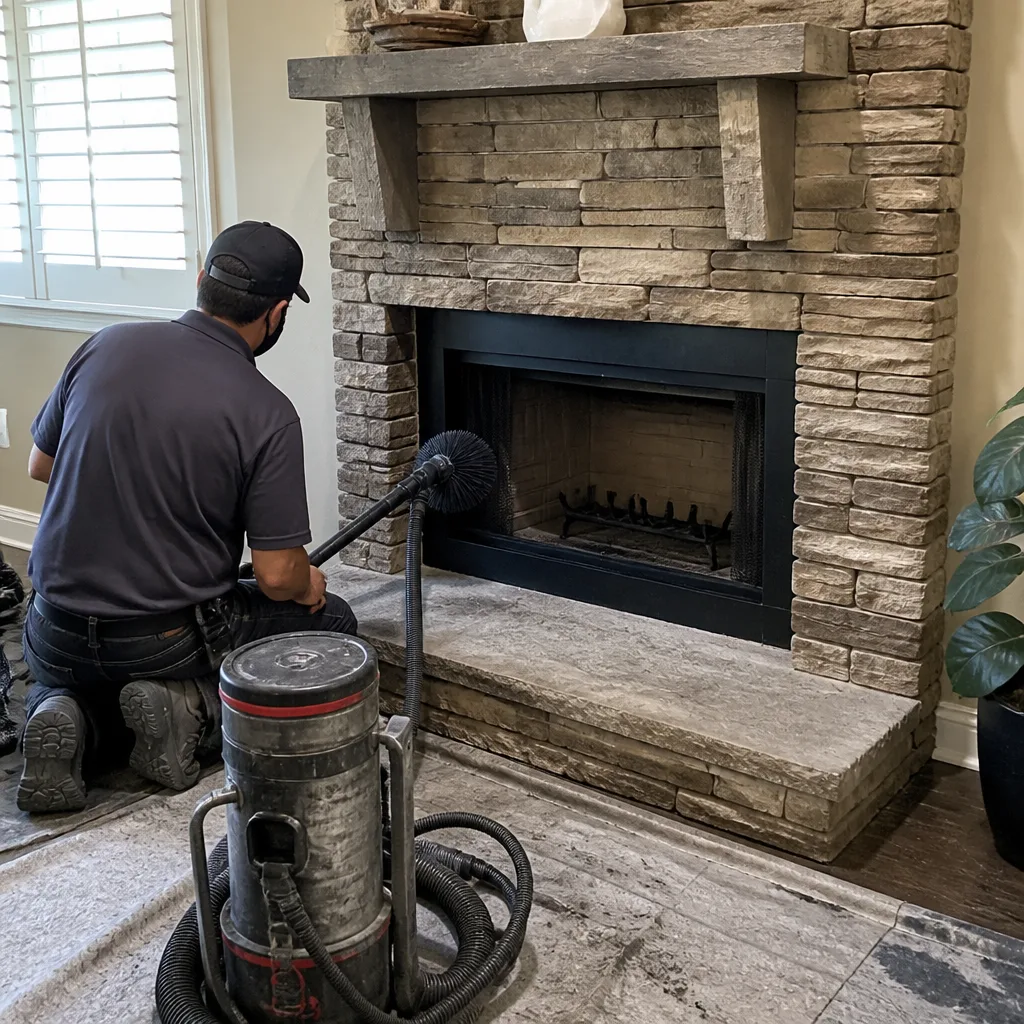
Chimney sweep logs do not sweep chimneys. They loosen some creosote - which then falls where a brush and vacuum still have to collect it.
 Before
 After
After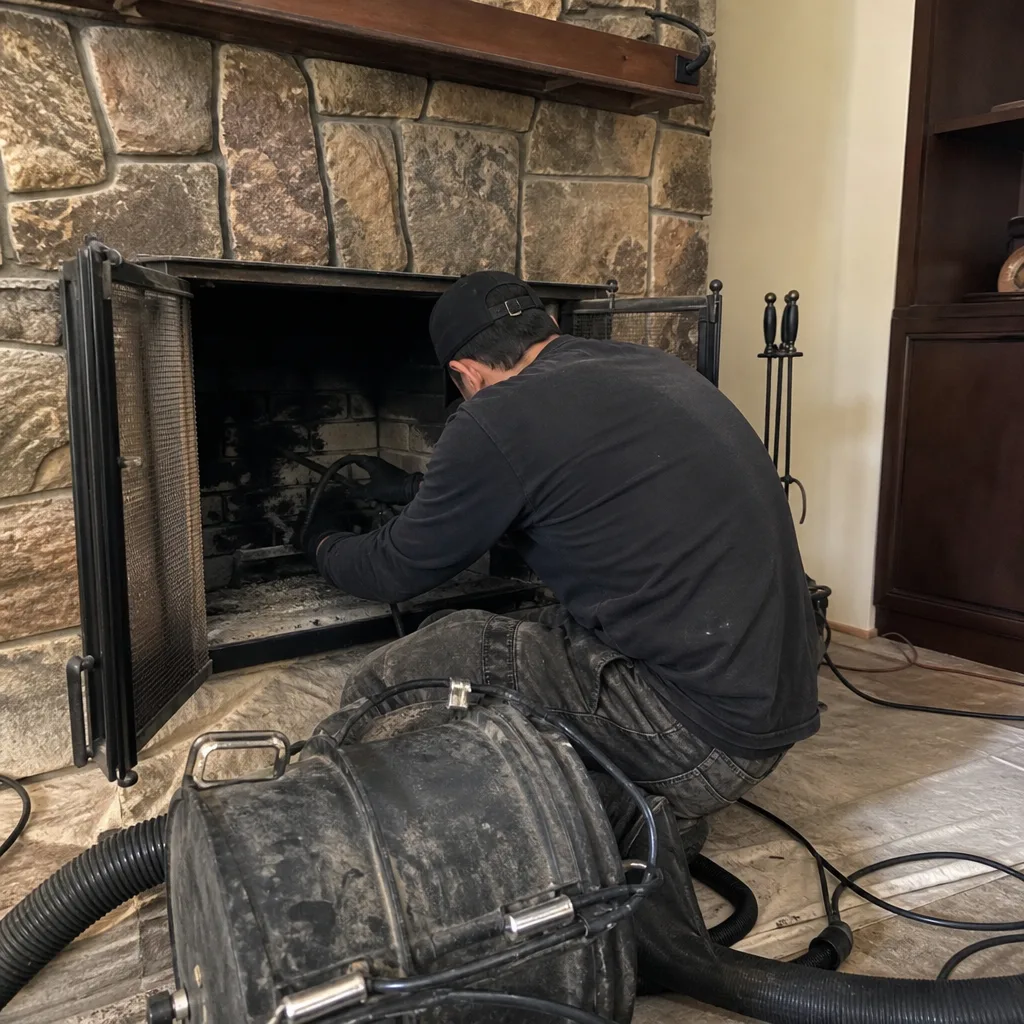 Before
 After
After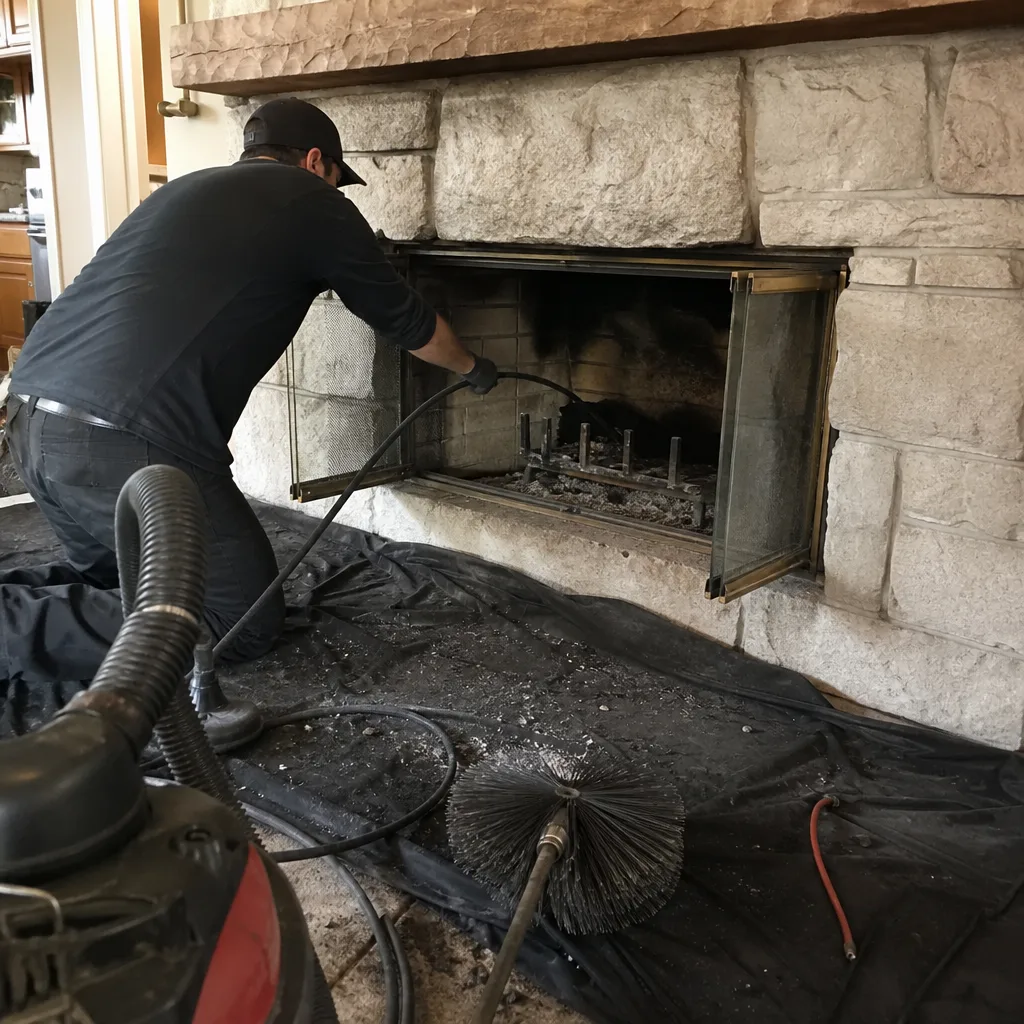 Before
 After
AfterSpalling Brick Repair in Denver, CO
Spalling brick repair in Denver typically costs between $350 and $2,800, depending on how many courses of brick are affected and whether the mortar joints need full Mortar Repointing alongside the brick replacement. Most jobs on a standard Denver chimney are completed in one visit. At Level Two Chimney Denver, every spalling repair starts with a camera-scan inspection so we know exactly what we’re dealing with before a written price lands in your hands – not after the work is already started.
Spalling happens when water gets into the brick face, freezes, and breaks the surface layer off. Denver’s climate makes this particular failure pattern extremely common: the metro averages around 300 days of sunshine a year, but that same altitude and thin air allows temperatures to drop hard and fast, sometimes 40 degrees in a single afternoon. That freeze-thaw cycling is brutal on chimney masonry, especially on chimneys that face west or south and absorb a lot of direct UV. If you’re seeing brick faces popping off, a reddish or sandy dust collecting at the chimney base, or chunks of masonry in your gutters after a cold snap, those are the signs. Call us at (720) 674-7312 – a live person picks up, any hour of the day.
Our Chimney Repair in Denver service covers the full spectrum of masonry damage, and spalling brick is one of the most common things we document on camera across Denver neighborhoods.
Why Denver Chimneys Spall Faster Than Most
This isn’t a generic masonry problem. Denver sits at 5,280 feet, and the combination of low humidity, intense UV radiation, and wide diurnal temperature swings creates conditions that degrade brick surfaces faster than almost anywhere in the continental United States. We’ve inspected chimneys in Washington Park, Hilltop, Park Hill, and Congress Park where spalling started within eight to twelve years of construction – a timeline that would surprise homeowners who moved here from more temperate climates.
A few Denver-specific factors accelerate the damage:
- Freeze-thaw cycles: Denver averages more than 150 freeze-thaw events per year. Water absorbed into the brick pore structure expands roughly 9% when it freezes. Brick faces that look solid in October can be visibly spalled by February.
- UV degradation at altitude: At 5,280 feet, UV intensity is meaningfully higher than at sea level. UV breaks down the silica bonds in brick over time, making the surface more porous and more vulnerable to moisture infiltration.
- Capillary absorption through open mortar joints: In Denver’s older Wash Park or Capitol Hill bungalows, original lime-and-sand mortar from the 1920s through 1950s is frequently crumbling. Open joints let water wick directly into the brick core.
- Snow melt refreeze: A Chinook wind can melt a foot of snow on a chimney in an afternoon. When temperatures drop again overnight, the meltwater sitting in mortar joints and brick cracks refreezes – often repeatedly in a single week.
We see it consistently in the foothills-adjacent neighborhoods too. Homes in Platt Park, Sunnyside, and the Highlands tend to get more wind-driven moisture on the chimney’s north face. In Stapleton and Green Valley Ranch, newer brick construction sometimes spalls earlier because the mortar mix wasn’t well-suited to Denver’s soil movement and temperature range.
When You Need Spalling Brick Repair
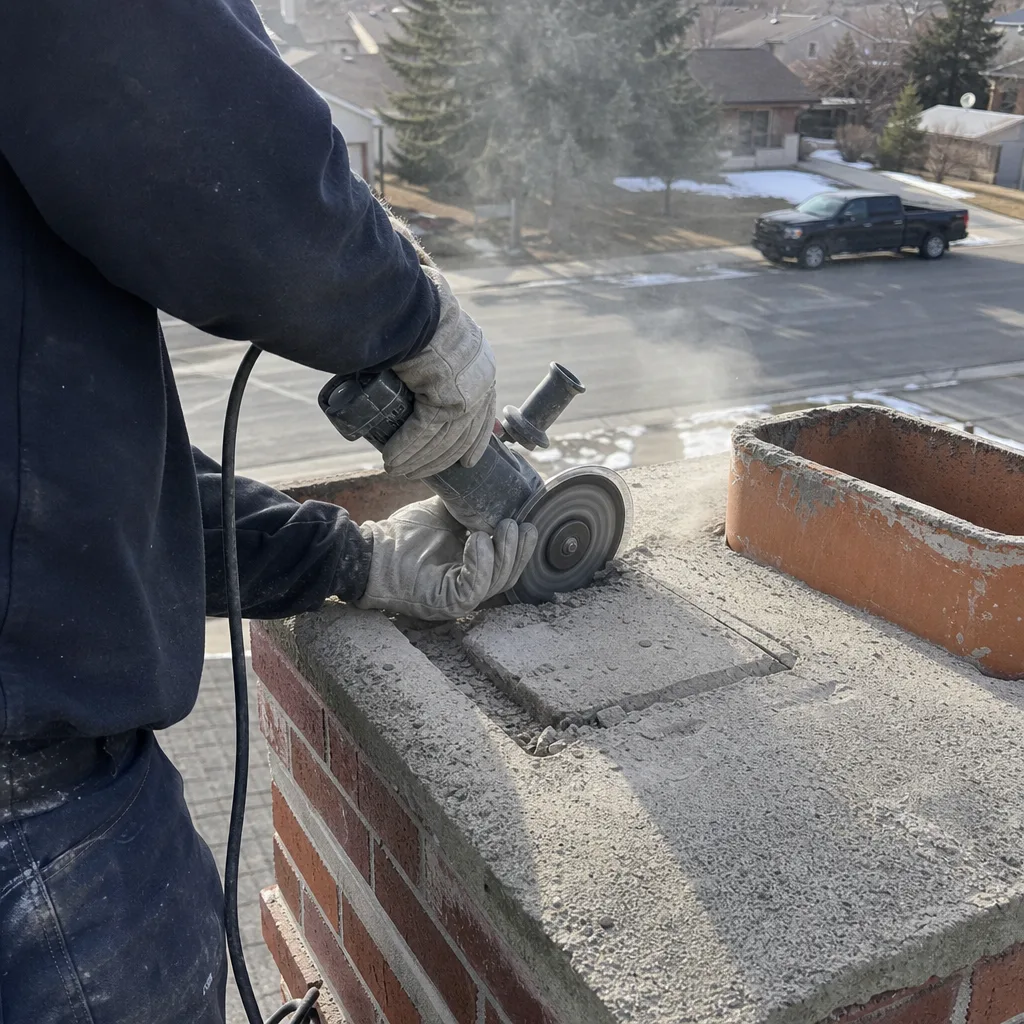
The damage shows up in recognizable patterns. Here’s what tells us a repair visit is warranted rather than something you can keep watching:
- Brick faces popping off in sheets or flakes: If the outer face of the brick – sometimes called the “spall” itself – is separating from the main brick body, the structural integrity of those courses is already compromised. This is past the “monitor it” stage.
- Red or sandy debris at the chimney base: Collecting a cup or more of this dust after a single cold snap means active spalling is underway. The debris is the eroded face material.
- Mortar joints recessed more than 1/4 inch: This is the entry point for water. A standard tuckpointing gauge puts the acceptable depth at 1/4 inch; beyond that, water infiltrates freely and reaches the brick core.
- White efflorescence staining: Those chalky white streaks on the chimney exterior are mineral salts being carried out by water moving through the brick. It’s a reliable sign that moisture is actively wicking through the masonry.
- Cracks running through brick faces rather than just along mortar lines: When cracks cross through the brick body itself, the brick has absorbed water repeatedly and the internal structure has fractured. Those bricks need replacement, not just repointing.
- Water stains on interior walls or ceilings near the chimney: If spalling is advanced enough that the chimney chase has lost its weather resistance, water follows the path of least resistance straight into your living space. We document the full moisture pathway on camera so you can see exactly where it’s entering.
 Before
 After
AfterOur Spalling Brick Repair Process
Every spalling repair we do follows the same documented sequence. Nothing gets skipped because we’re in a hurry, and nothing gets added to the scope without your written approval first. That’s Haven Standard Clause 1 in plain terms: written price, written scope, written warranty before anyone picks up a tool.
- Camera-scan inspection with a written report: We run a full NFPA 211 Level 2 camera inspection of the flue and document the exterior masonry condition with photographs. The camera footage shows us whether water intrusion through the spalled sections has reached the flue liner or smoke chamber. You get a copy of that record; it’s yours permanently under Clause 4 of the Haven Standard. This documentation step has been standard on every Level Two job since 2009 – across more than 38,000 inspections and cleanings.
- Written price before work starts: Once the inspection is complete, we give you a flat written price for the repair. The number on that paper is the number on your invoice. We also note whether any adjoining work – crown sealing, cap replacement, repointing – is recommended, and those items stay on the estimate, not added as surprises mid-job.
- Removal of spalled and compromised brick: Our technicians carefully extract the damaged brick units and any mortar that has crumbled, delaminated, or lost its bond. We don’t grind around failed bricks and call it done; the surrounding mortar bed gets evaluated and cleared to a sound surface.
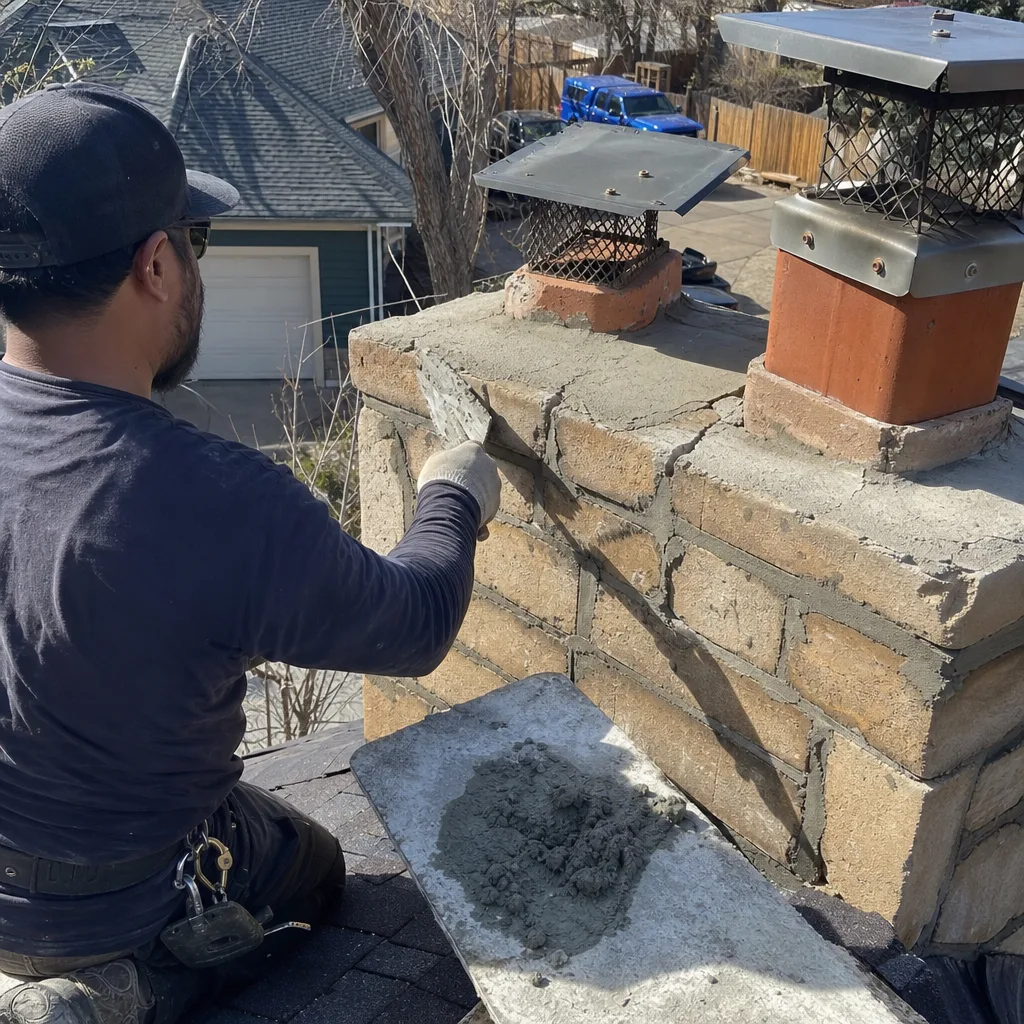
- Replacement with matched masonry and correct mortar mix: We source replacement brick and masonry materials through Haven’s supply network – including materials from Olympia Chimney and Gelco where appropriate for the application – specifically to keep costs honest and match the grade and color of your existing chimney as closely as the Denver market allows. Mortar mix is matched to your chimney’s age and brick hardness; a Portland-heavy mix on a soft historic brick causes more spalling, not less. We use the right ratio for the application.
- Repointing affected mortar joints: Any joints showing recession, crumbling, or void sections within the repair zone get repointed as part of the same visit. Leaving open joints adjacent to new brick just reintroduces the problem through the path of least resistance.
- Photo documentation and written warranty: When the work is done, we photograph the completed repair and log it to your job record. The 365-Day Done Right Promise covers every repair: if it’s not done right, we make it right. That’s not a handshake – it’s stamped on your written documentation.
Spalling Brick Repair Pricing in Denver
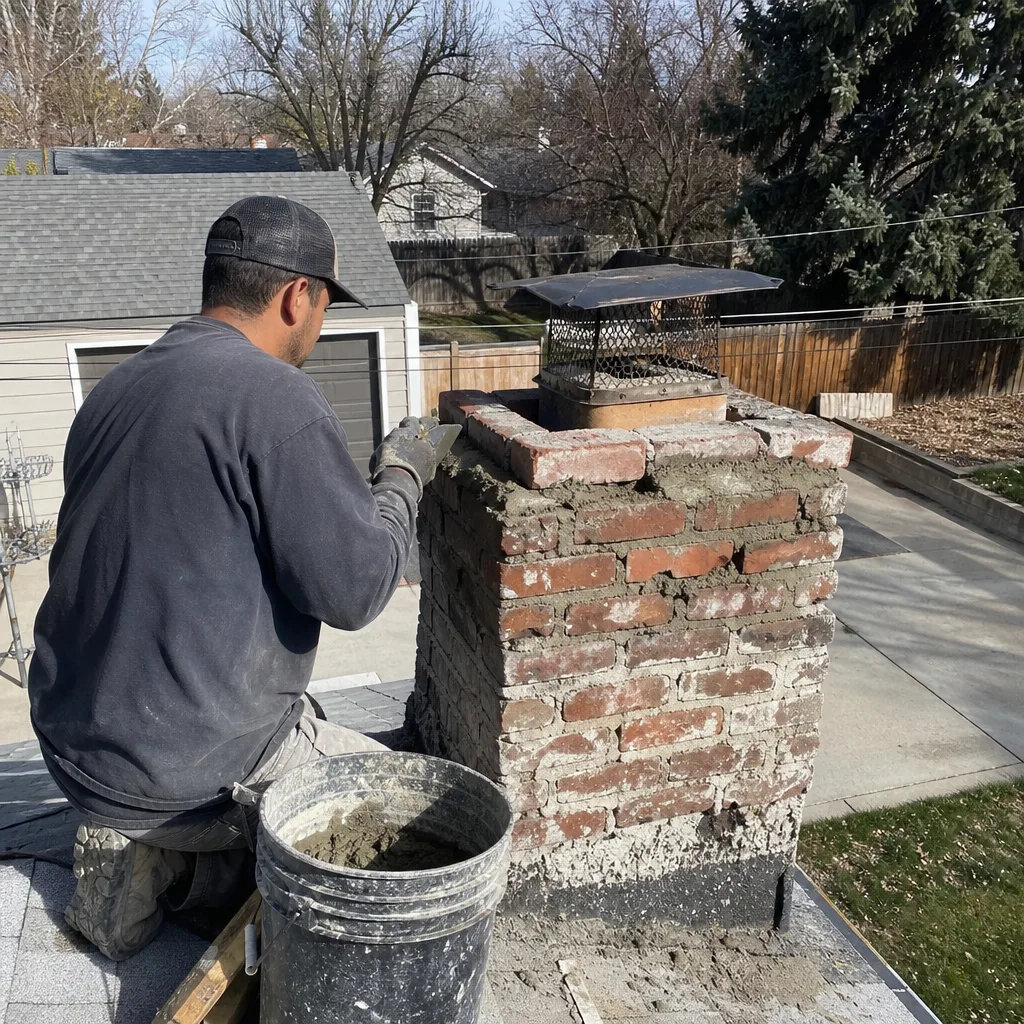
Spalling brick repair in Denver runs between $350 and $2,800 for the large majority of residential chimney jobs. See How Much Does Chimney Repair Cost? (2026 Price Guide) - Denver, CO for a detailed breakdown of how that range works in practice:
| Scope of Work | Typical Price Range |
|---|---|
| Minor spalling repair (1-5 bricks, limited repointing) | $350 – $650 |
| Moderate repair (6-20 bricks, repointing one or two chimney faces) | $650 – $1,400 |
| Significant repair (20+ bricks, full repointing, possible crown work) | $1,400 – $2,800 |
| Structural rebuild (severe spalling with liner or smoke chamber damage) | Quoted separately after camera inspection |
What moves the number up or down:
- Number of damaged courses: A chimney with one spalled section on the upper stack is a half-day job. A chimney where spalling has progressed across three exterior faces over multiple courses is a different project entirely.
- Chimney height and roof pitch: Denver homes in the Hilltop and Congress Park areas often have steeper pitches and taller chimneys than newer construction. Additional staging or specialized access adds to labor cost.
- Mortar joint condition: If the joints are sound and only the brick faces are spalling, the repair scope is tighter. If open joints contributed to the spalling – which is common in older Denver construction – full repointing adds to the scope and the price.
- Interior water damage: If spalling has allowed water to breach the flue liner or damage the smoke chamber, those components are repaired separately. The camera inspection tells us exactly what we’re dealing with before we quote anything.
The written price you receive before work starts is the price you pay. If the camera inspection reveals something that changes the scope, we show you the footage, explain what we found, and give you a revised written number before proceeding. Call (720) 674-7312 for a free estimate – we’ll give you a real number, not a range that exists to get a tech in your door.
If you’ve already received a written estimate from another company, bring it to us. We offer a free second opinion on any written competitor quote.
What Happens If Spalling Brick Goes Unrepaired
Brick that’s actively spalling isn’t just cosmetic. The chimney’s structural integrity depends on full, sound brick units carrying the load of the stack above. Once the face layer separates, the remaining brick core is thinner, more porous, and more vulnerable to the next freeze cycle. Damage compounds faster than most homeowners expect.
In Denver’s climate, a chimney showing minor spalling in spring can have visible structural brick loss by the following January. We’ve documented this progression on camera in Sloan’s Lake and Whittier homes where the owners noticed a little sandy debris and decided to wait a season. By the time we came back, the repair scope had tripled. The freeze-thaw calendar in Denver doesn’t leave a long window between “watch it” and “fix it.”
Beyond the masonry itself, advanced spalling opens water pathways into the flue liner. A compromised liner is a fire safety issue, not just a structural one. Carbon monoxide and combustion gases that should be channeled up and out of the home can migrate into the living space through cracked liner sections. That’s the point at which a cosmetic masonry problem becomes a life-safety concern. We say that plainly, not to alarm you, but because it’s true and a real inspector will tell you the same thing.
FAQs – Spalling Brick Repair
How much does spalling brick repair cost in Denver?
Spalling brick repair in Denver costs between $350 and $2,800 for most residential chimney jobs, depending on the number of damaged bricks, the condition of the mortar joints, and whether any adjoining work like crown repair or liner inspection is needed. Minor repairs on the upper stack run toward the lower end; repairs involving multiple chimney faces and extensive repointing run higher. Every job at Level Two Chimney Denver comes with a written price before work starts – no estimates that shift once the technician is already on your roof. Call (720) 674-7312 for a free on-site estimate.
Can spalling brick be repaired, or does the whole chimney need to be rebuilt?
Most spalling brick damage can be repaired through our Chimney Repair services by removing and replacing the affected brick units and repointing the surrounding mortar joints – a full rebuild is only warranted when structural damage has extended deep into the chimney core or when the flue liner and smoke chamber have been compromised by long-term water intrusion. Our camera-scan inspection is the tool that answers this question definitively, because the camera shows us the condition of every component, not just the exterior face. We’ll show you the footage, describe exactly what we found, and give you a written price for the repair scope that’s actually necessary.
How long does spalling brick repair take?
Minor to moderate spalling repairs on a Denver chimney are typically completed in a single visit of two to four hours. Larger repairs involving multiple chimney faces, significant repointing, or any adjoining crown or cap work may run five to seven hours or require a follow-up visit for mortar curing in cold weather. Denver’s climate matters here: mortar requires temperatures above 40 degrees Fahrenheit to cure properly, so repairs scheduled in January may need specific timing within the day to avoid a freeze before the mortar sets. We account for that in the scheduling conversation.
What’s the difference between spalling brick repair and tuckpointing?
Tuckpointing – sometimes called repointing – addresses the mortar joints between bricks: the technician removes deteriorated mortar and packs in fresh material to restore the weather seal. Spalling brick repair addresses the brick units themselves: bricks whose face layer has fractured off are removed entirely and replaced with new matching brick. In practice, the two repairs often happen together, because open mortar joints are frequently the cause of the water infiltration that leads to brick spalling in the first place. Your written estimate from us will itemize both scopes separately so you can see exactly what’s being done and why.
Key Takeaways
- Spalling brick repair in Denver costs $350-$2,800 for most residential chimney jobs, quoted in writing before any work begins.
- Denver’s freeze-thaw cycles and high-altitude UV make spalling faster and more severe here than in most U.S. cities.
- Neighborhoods like Park Hill, Washington Park, Hilltop, and Capitol Hill see significant spalling in older masonry chimneys; newer construction in Stapleton and Green Valley Ranch is not immune.
- A camera-scan inspection (NFPA 211 Level 2) documents the full extent of damage before we quote anything – you get a copy of that record permanently.
- The 365-Day Done Right Promise covers every repair. Written scope, written price, written warranty on every job.
- Unrepaired spalling can progress from cosmetic damage to liner compromise and carbon monoxide risk within a single Denver winter season.
Schedule Your Spalling Brick Inspection in Denver
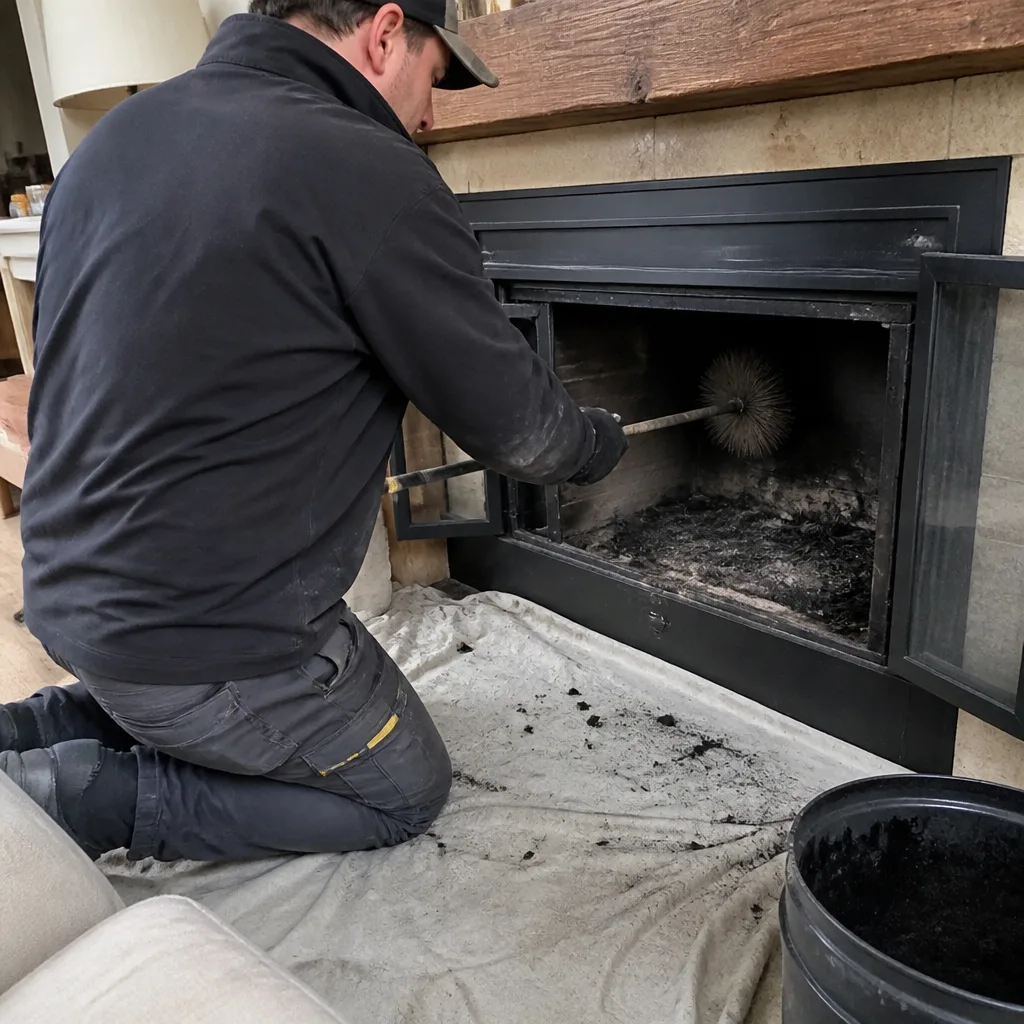
If you’re seeing brick faces peeling away, sandy debris at the chimney base, or white staining on the exterior masonry, the right next step is a camera-scan inspection – not a flashlight look from the roofline. At Level Two Chimney Denver, every inspection produces a documented photo record and a written price. You’ll know exactly what was found, exactly what it costs to fix it, and exactly what the repair covers before anyone starts work. That’s been the standard here since 2009, across more than 38,000 jobs in the Denver metro.
Call (720) 674-7312 to schedule. A live person answers, any time of day. Or visit our home page to learn more about how Level Two Chimney Denver works. Free estimates, written upfront, no pressure to proceed on the same visit.
Written by Corrine Halstead, Owner at Level Two Chimney Denver, serving Denver.