
Last updated September 22, 2026
Level 1 sweep and inspection to the NFPA 211 annual standard - flue, crown, cap, and flashing checked and photographed
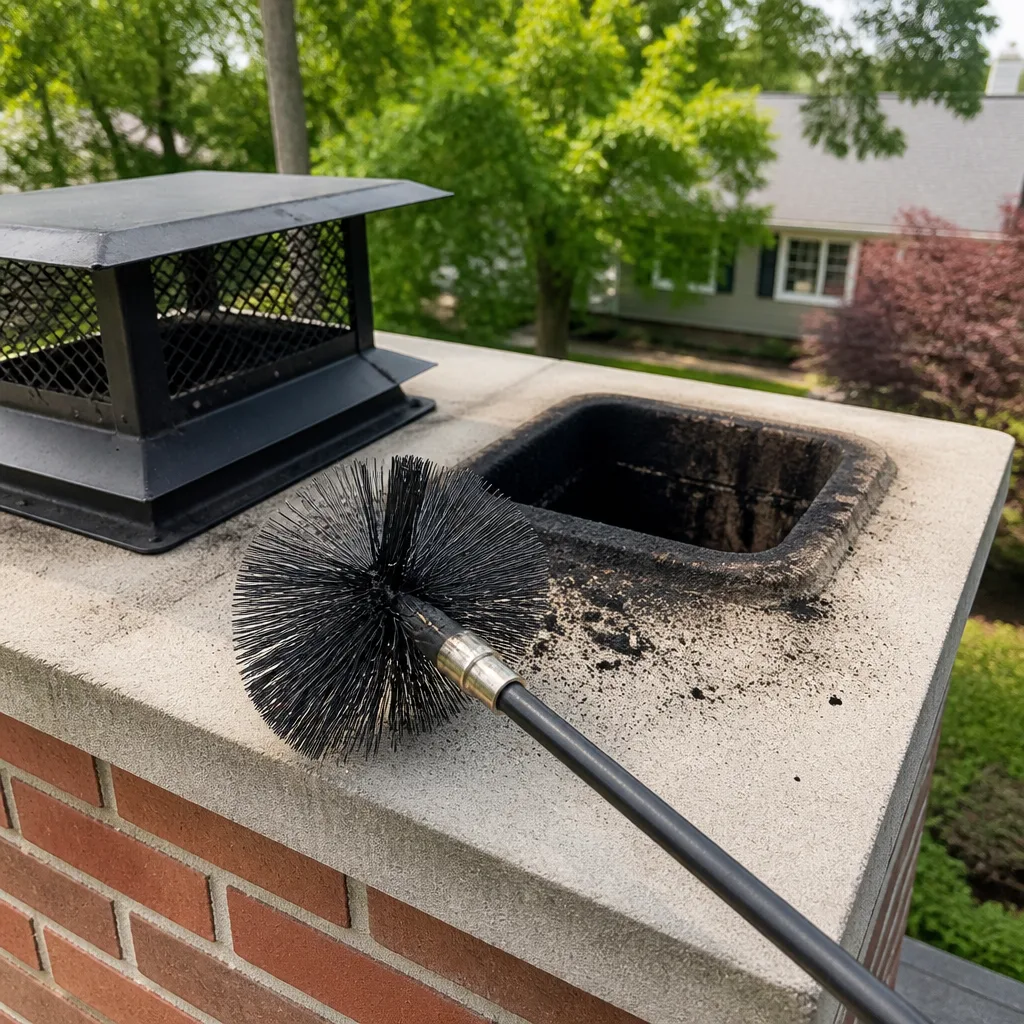
Chimney sweep logs do not sweep chimneys. They loosen some creosote - which then falls where a brush and vacuum still have to collect it.
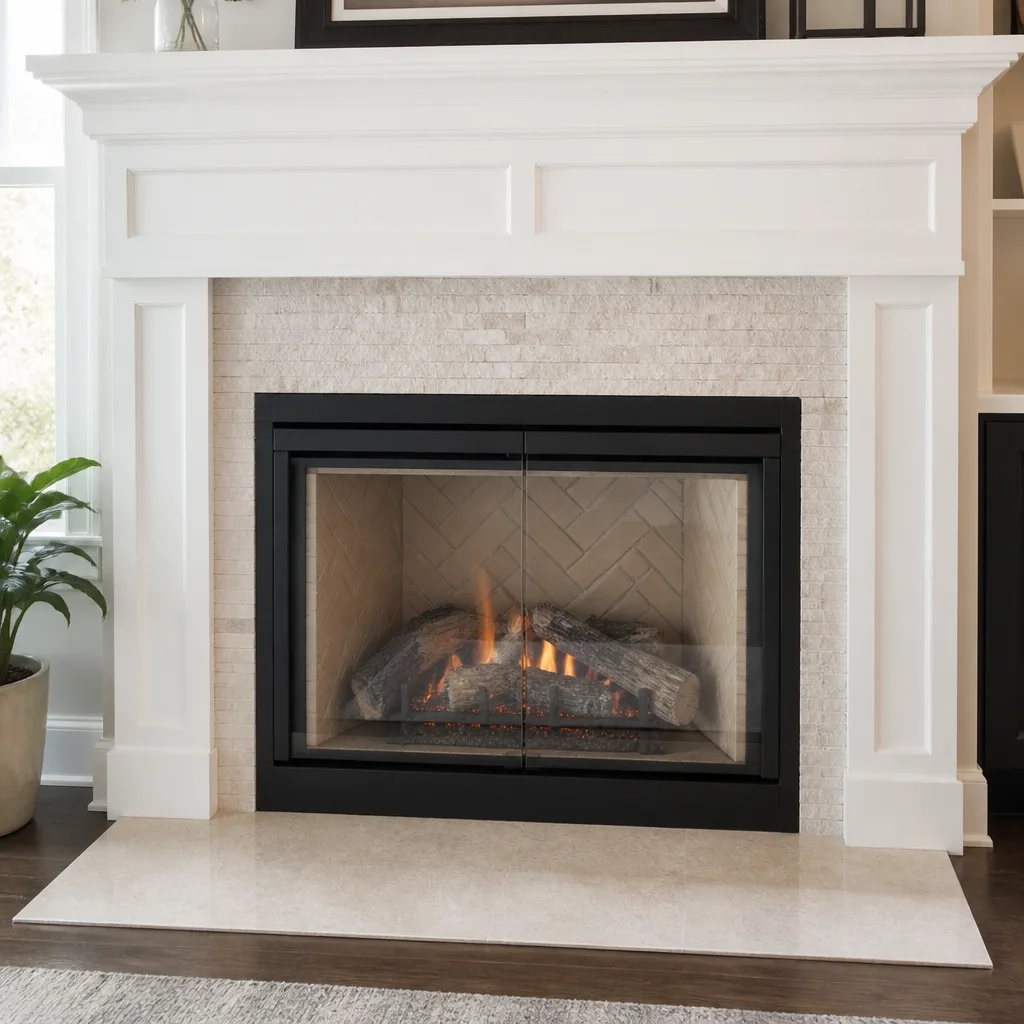
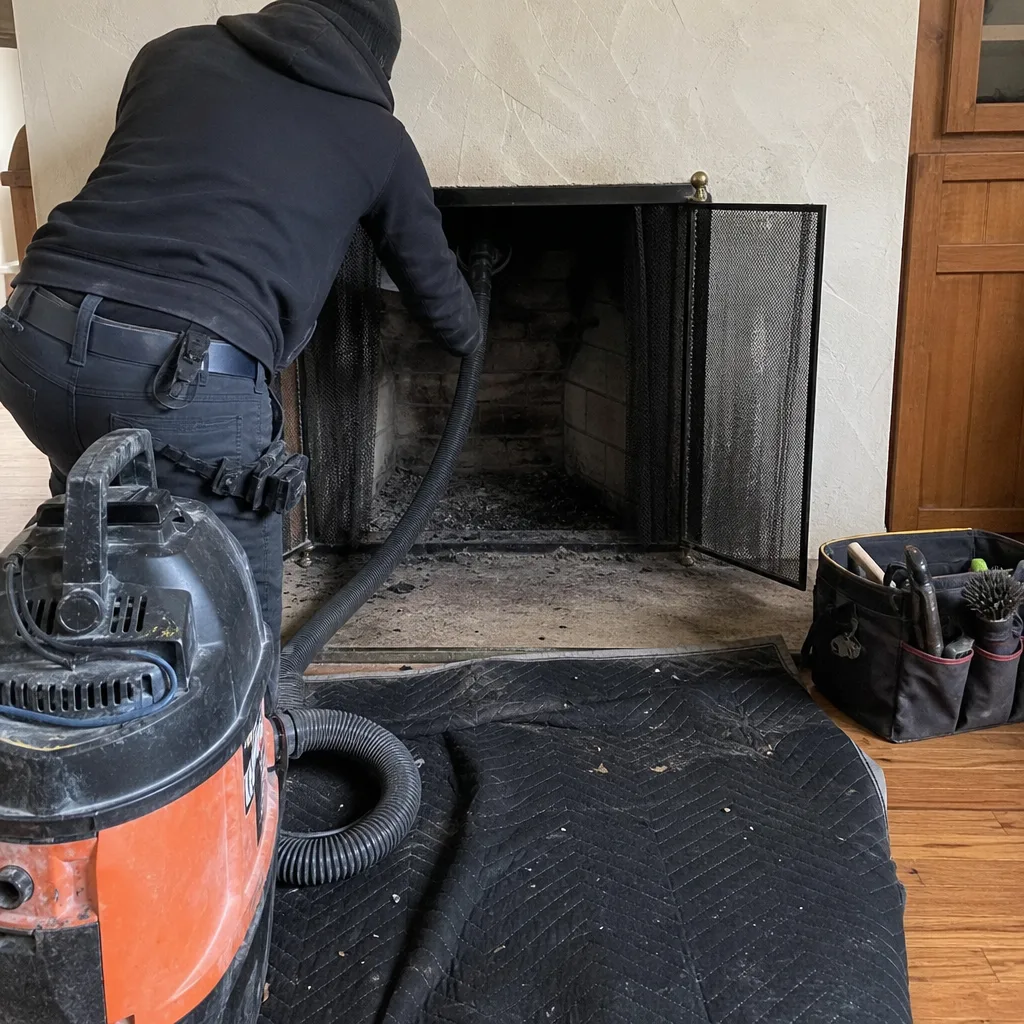 Before
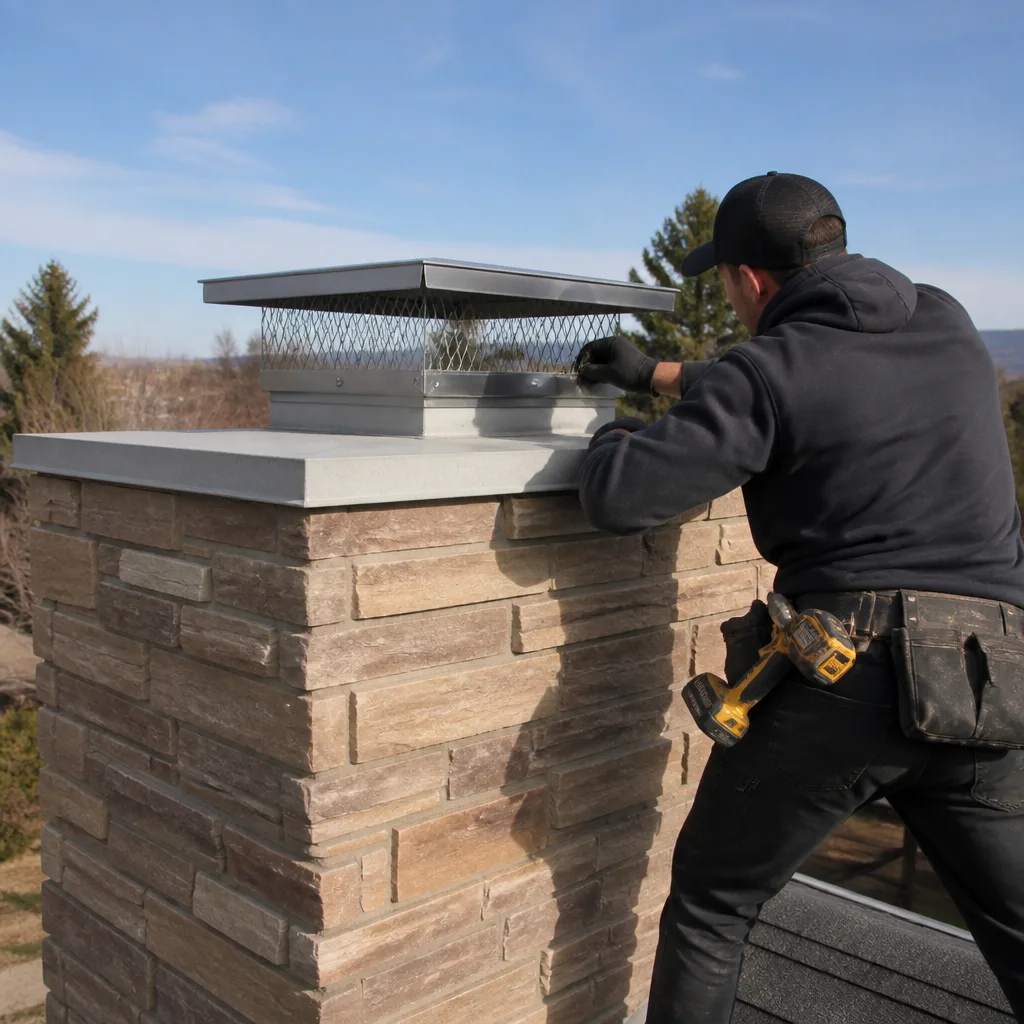 After
After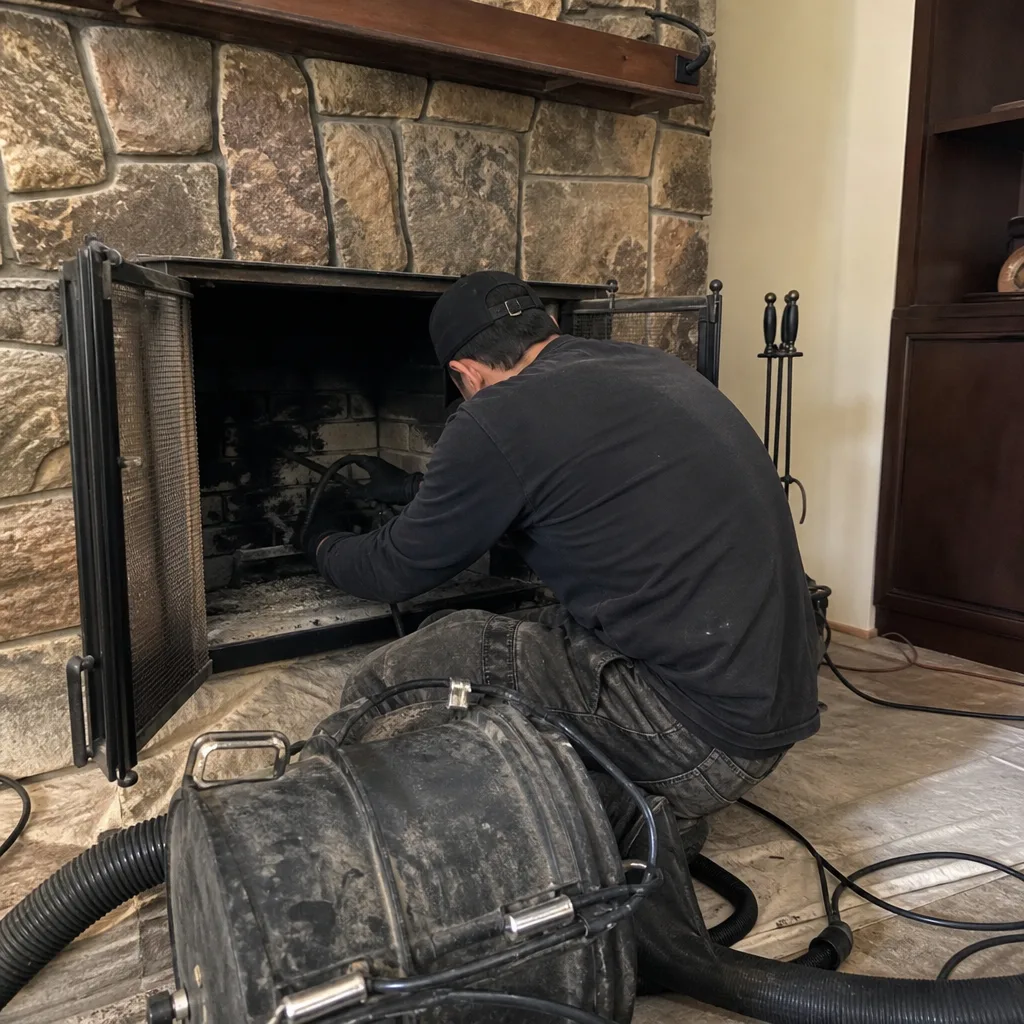 Before
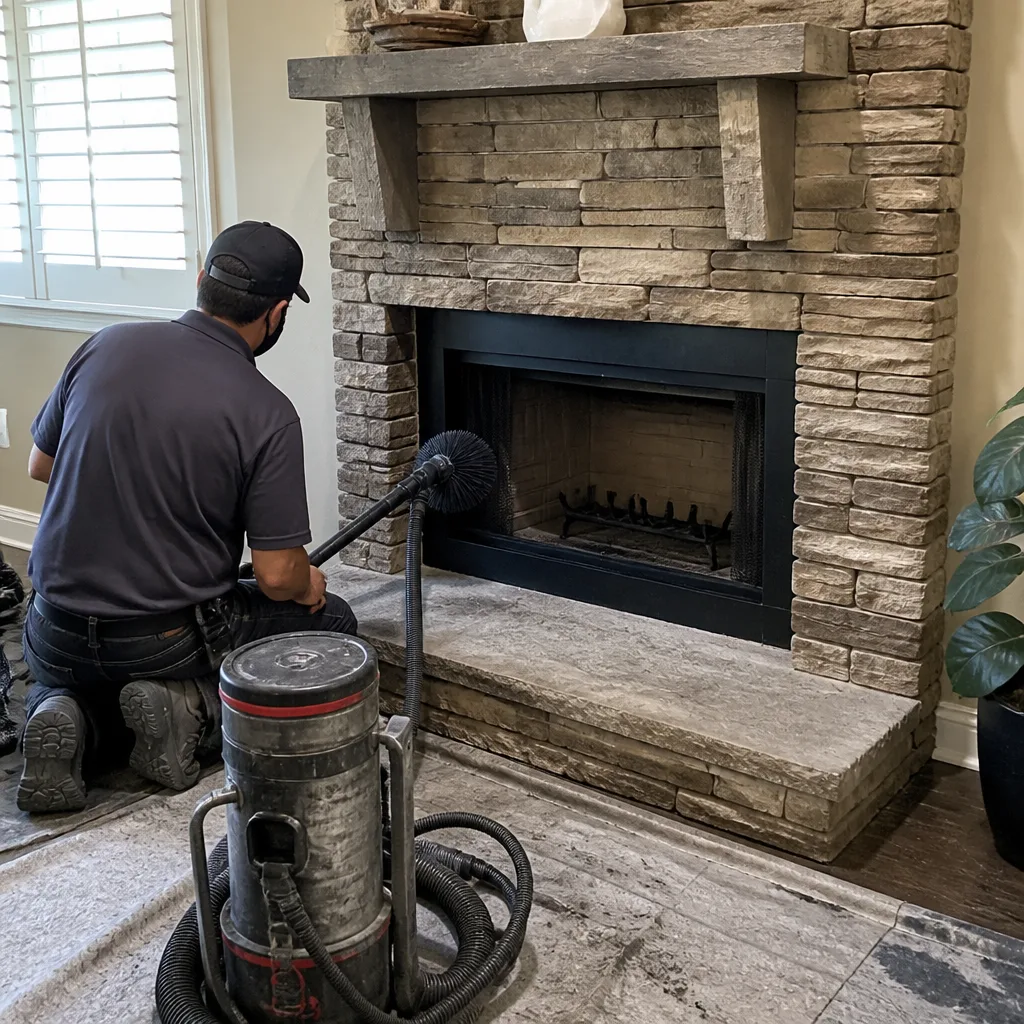 After
After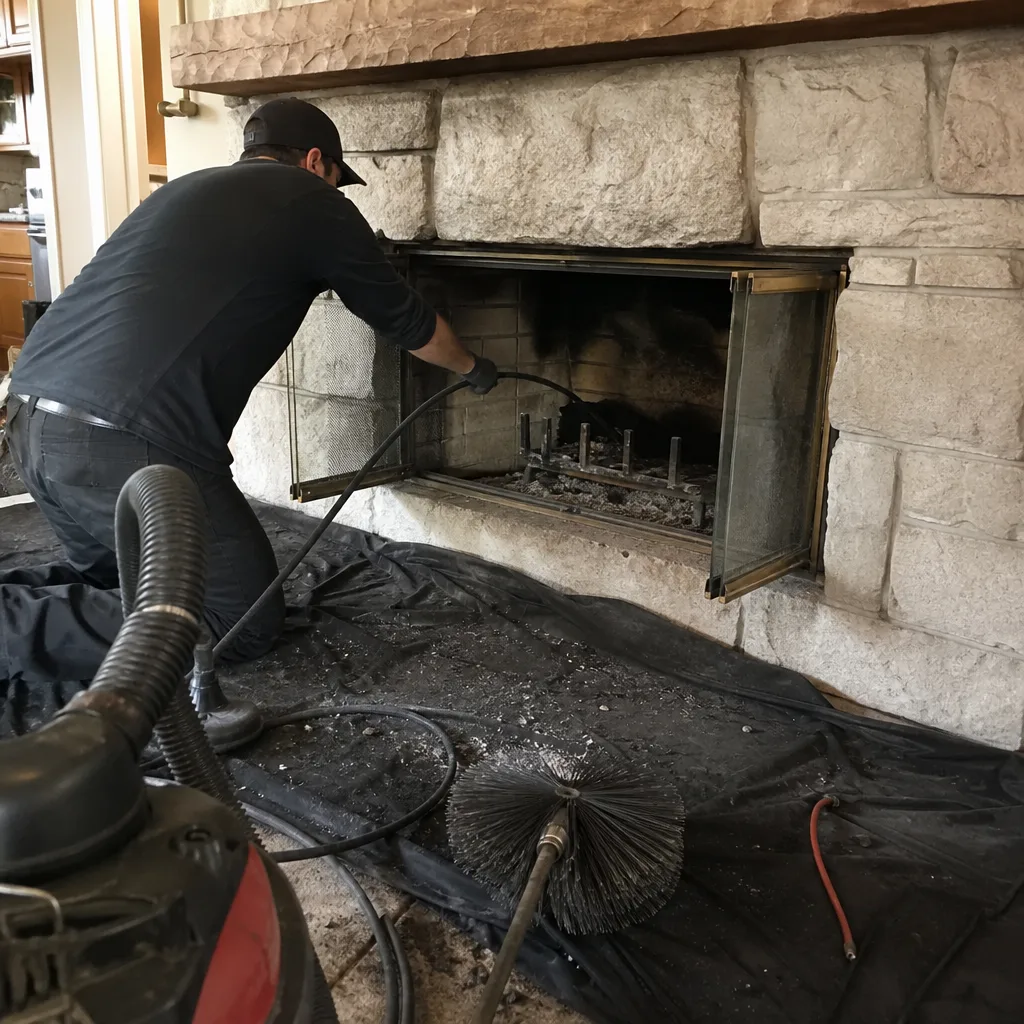 Before
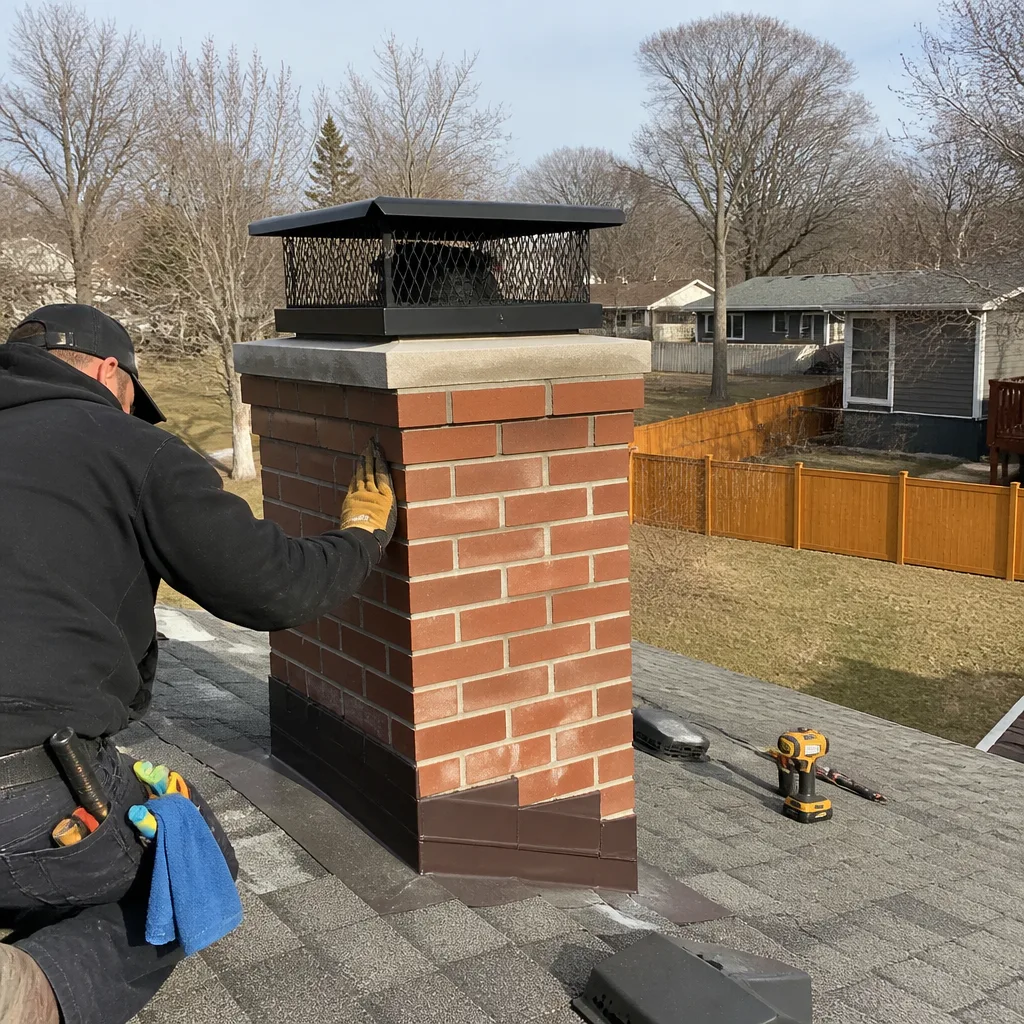 After
AfterSeasonal Chimney Cleaning Care for Denver: Year-Round Homeowner’s Guide
Denver homeowners light fires in April. They also get 70°F days in January. A seasonal chimney guide that only mentions “fall cleaning” is ignoring half the year your flue is either burning or absorbing moisture. Since 2009, we’ve completed more than 38,000 chimney inspections and cleanings across the Front Range, and the pattern is consistent: the chimneys that fail are the ones that sat uninspected through summer monsoon season, not the ones that missed a September sweep. In this guide, you’ll learn how Denver’s actual burn calendar, freeze-thaw cycles, and summer moisture intrusion should shape when you inspect, what you inspect for, and why cleaning after your last spring fire gives you more diagnostic value than rushing before the first fall fire.
Quick Answer
Denver’s four-season burn pattern means your chimney needs attention in spring (after the last fire), summer (during monsoon moisture intrusion), and fall (before the first freeze), not just a single autumn sweep. A camera-scan inspection after your final spring fire reveals creosote buildup and moisture damage when they’re freshest, while a summer cap and crown check prevents the freeze-thaw damage that starts in November. Year-round care in Denver typically runs $180-$320 for a Level 2 inspection with cleaning, with repair needs identified before they become full rebuilds. For a detailed breakdown, see our Chimney Cleaning Cost Breakdown: The Denver Homeowner’s Reference for 2026.
Table of Contents
- Denver’s Unique Burn Calendar: When Fires Actually Happen
- Spring: Why We Clean After the Last Fire, Not Before the First
- Summer: Monsoon Moisture and What It Does to Your Liner
- Fall: The Real Inspection Window Before Freeze-Thaw
- Winter: Reading the Signs Your Chimney Sends While Burning
- Liner Materials and the Front Range Freeze-Thaw Problem
- What a Level 2 Inspection Actually Includes in Denver
- Costs and Scheduling: Denver-Specific Pricing
 Before
 After
AfterDenver’s Unique Burn Calendar: When Fires Actually Happen
National chimney advice assumes a binary heating season: off in summer, on in winter. That model fails in Denver. Our elevation, solar gain, and dry climate create a genuine four-season burn pattern that most homeowners don’t recognize until we show them the creosote patterns.
Here’s what the data from 38,000+ inspections actually shows:
- January-February: Deep winter burning, often daily. These are your heaviest creosote months because fires burn longer and cooler as homeowners bank them overnight.
- March-April: Shoulder season fires spike. Denver sees 50°F temperature swings in a single day; the fire goes on at 6 p.m. when it’s 35°F, off by morning when it’s 65°F. This stop-start pattern produces glazed creosote (Class III) faster than steady burning.
- May-June: Fires taper, but we still see active use in Stapleton, Hilltop, and Cherry Creek homes with older HVAC systems or design preferences.
- July-August: Officially “off,” but summer storms drive moisture down uncapped flues. This is when hidden damage accumulates.
- September-October: Second shoulder season. First fires often happen in September now, not October. By the time national “fall cleaning” advice kicks in, many Denver chimneys have already burned a dozen times.
- November-December: Freeze-thaw begins in earnest. Any moisture absorbed through summer cracks expands now, spalling clay tile and opening mortar joints.
In Park Hill and Berkeley, we regularly see homeowners who burned through April, let the chimney sit all summer, then lit a September fire without inspection. The creosote from spring was already hardened; the moisture from August storms found cracks they couldn’t see; the first fall fire tested a compromised system. That’s the pattern we wrote this guide to break.
Spring: Why We Clean After the Last Fire, Not Before the First
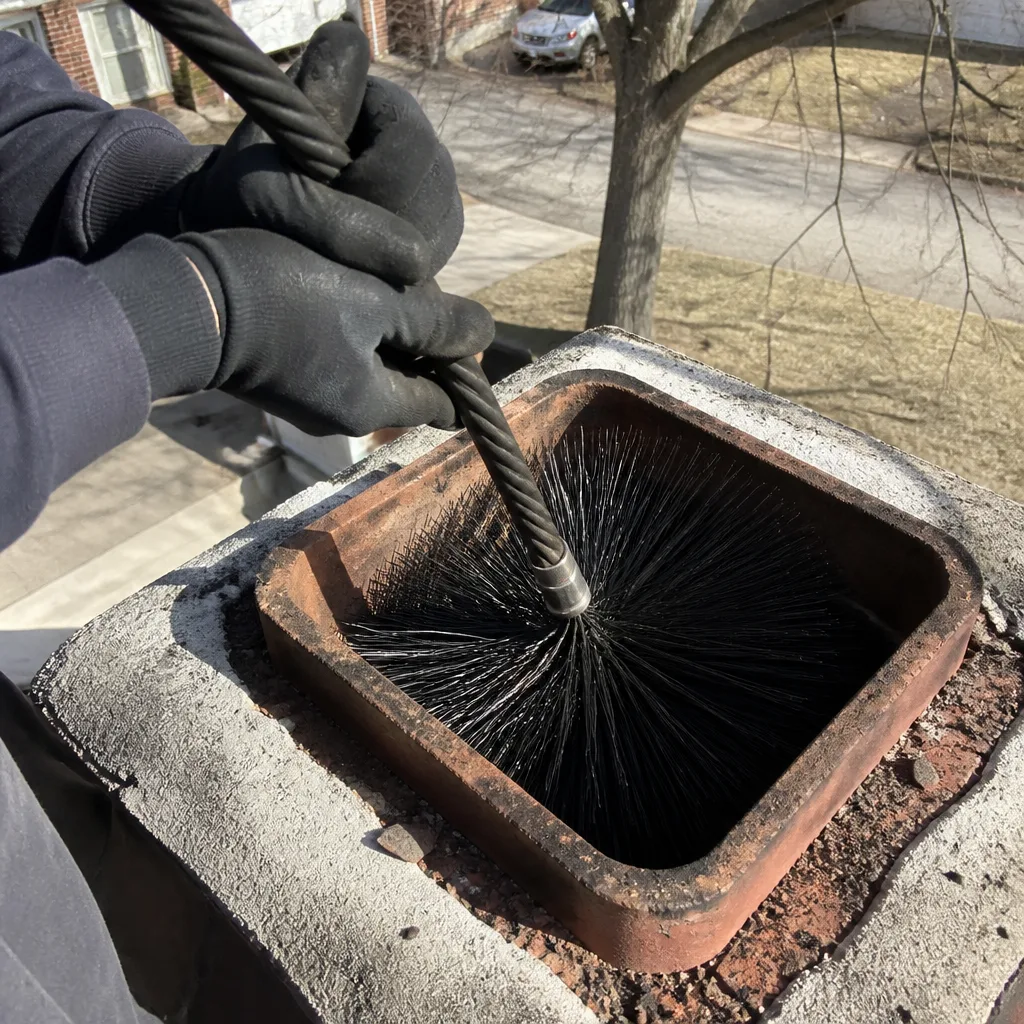
The conventional wisdom says clean before burning season. For Denver, we recommend the opposite: inspect and clean after your final spring fire, when the evidence is fresh and the diagnostic value is highest. Our Chimney Cleaning & Sweep Maintenance Checklist for Denver Homeowners walks you through each seasonal step.
Here’s why timing matters:
- Creosote is softest immediately after burning. Class I and II creosote (soot and flaky deposits) brush out easily within weeks of formation. Wait six months, and it hardens into Class III glazed creosote, which requires rotary chains or chemical treatment. In our experience across Washington Park and Congress Park, spring-cleaned flues need 40% less aggressive cleaning than fall-cleaned flues with the same burn history.
- Moisture damage from winter is visible before summer cures it. When we camera-scan a flue in April, we see the efflorescence (white mineral deposits), hairline cracks, and spalling that winter freeze-thaw produced. By September, summer heat has often dried and closed these signs, hiding progressive damage.
- You have time to schedule repairs before fall. Liner replacement, crown rebuilds, and masonry repointing take 2-4 weeks in Denver’s busy season. Discovering needed work in April means scheduling in May, not competing with October panic bookings.
What we check in spring:
- Creosote class and thickness, measured at the smoke chamber and flue bends
- Clay tile condition, especially at the flue’s exposed shoulder where thermal shock concentrates
- Smoke chamber parge coat integrity (the shaped area above the damper that directs smoke into the flue)
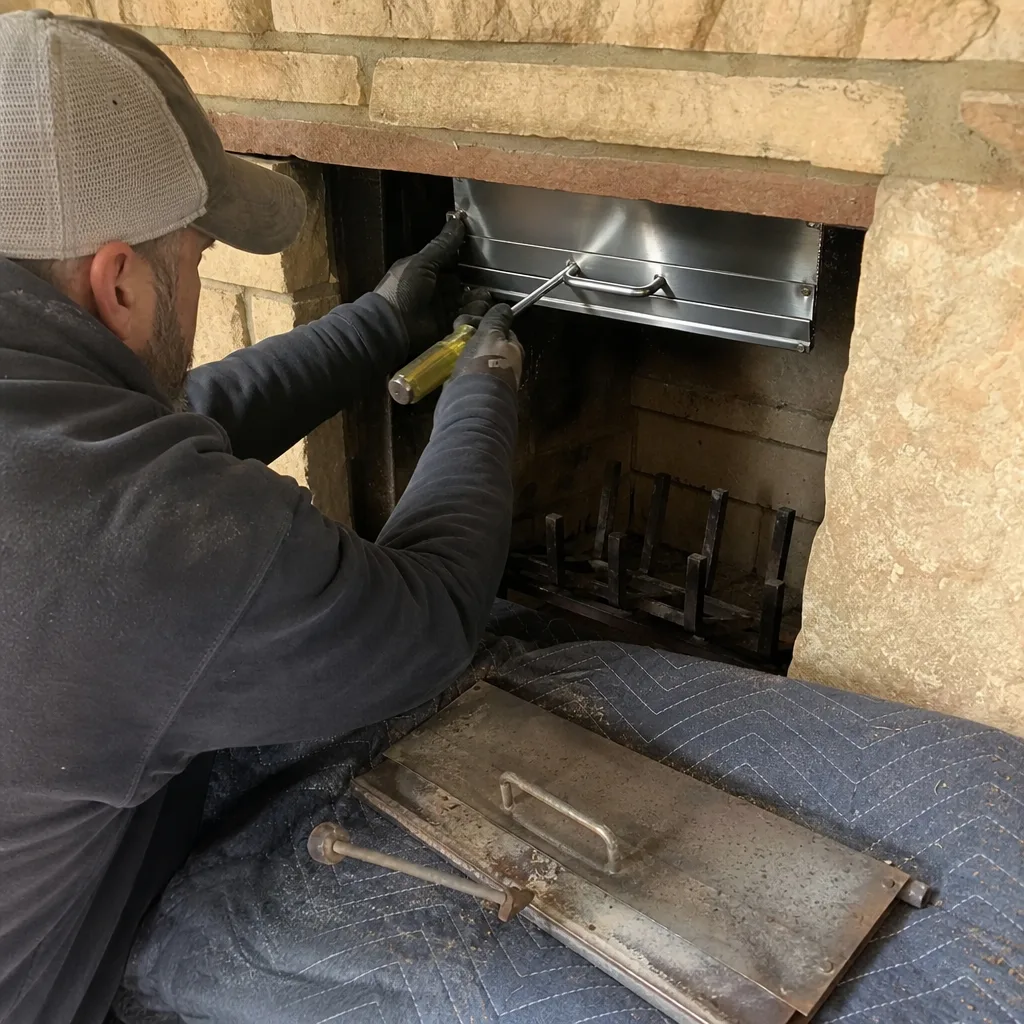
- Damper operation and seal; a leaking damper costs you conditioned air all summer
- Firebox brick and mortar for heat-related spalling
Every spring inspection at Level Two Chimney Denver includes a documented photo record under Haven Standard Clause 4. You receive the images, the written scope, and the written price before any work starts. Clause 1 of the Haven Standard requires it.
Summer: Monsoon Moisture and What It Does to Your Liner
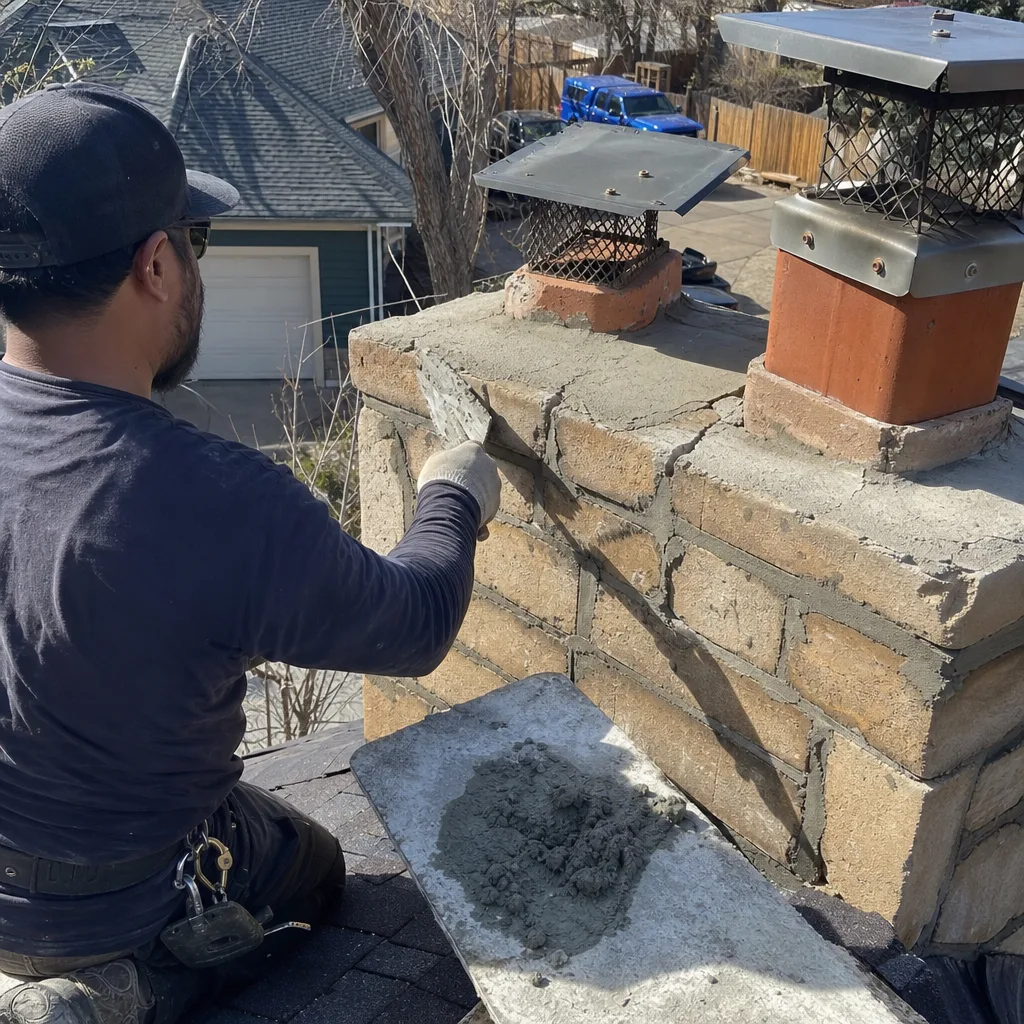
Denver’s summer monsoon season, typically mid-July through August, delivers brief, intense rainfall with wind-driven moisture. A missing or damaged chimney cap is an open pipe. Water enters, pools on smoke shelf ledges, and begins a cycle of damage that accelerates in fall.
What moisture does to each liner type:
| Liner Type | Summer Risk | What We Find in Fall |
|---|---|---|
| Clay tile | Water penetrates cracked tiles, saturates surrounding masonry | Spalled tile faces, separated joints, efflorescence on exterior brick |
| Stainless steel | Minimal direct damage, but water accelerates corrosion at breech connections | Rust streaks, loose fittings, draft reduction |
| Cast-in-place (HeatShield, etc.) | Water finds any pinhole or crack, freezes in fall, expands void | Delamination, flaking, exposed substrate |
In Montclair and Glendale, we see a predictable pattern: homes with no cap or a cheap galvanized cap (often installed by roofers, not chimney professionals) show measurable moisture intrusion by September. The cap is not decorative. It is a functional component that prevents the $2,800-$4,500 liner replacement that follows two seasons of unchecked water entry.
Summer is also when we recommend the cap-and-crown inspection as a standalone service. It takes 45 minutes, includes photos of crown condition and cap fit, and costs $120-$180 in the Denver market. If the crown has hairline cracks, we can apply a flexible crown sealant (we use Gelco and Copperfield formulations) before fall freeze-thaw opens them to water penetration. Waiting until fall means the sealant cures in marginal temperatures, or the cracks have already widened.
Fall: The Real Inspection Window Before Freeze-Thaw
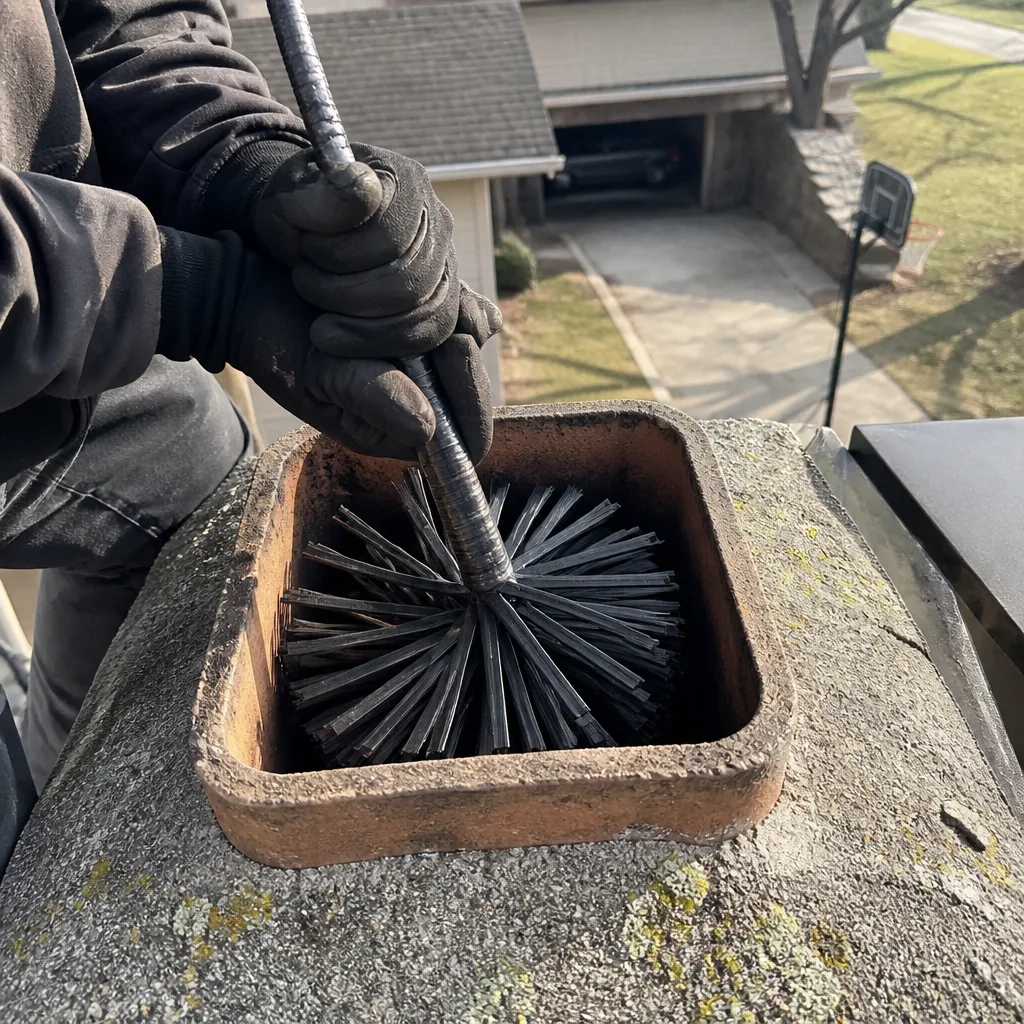
Fall is when most Denver homeowners think about their chimney. It’s also when our schedule fills six weeks out. The homeowners who get the best service are the ones who did spring cleaning and need only a confirmation check, not the ones discovering a blocked flue on the first cold night.
If you skipped spring, here’s what a proper fall inspection covers:
- Obstruction check. Bird nests in uncapped flues, squirrel caches in chimney shoulders, and leaf accumulation from overhanging maples (common in Park Hill and Crestwood) must be removed before first fire. A blocked flue pushes carbon monoxide into living space.
- Damper and smoke chamber. The damper must open fully and seat flat. The smoke chamber must show intact parge coating with no exposed corbelled brick. In older Denver homes, especially pre-1950 brick bungalows in Baker and West Highland, smoke chambers were built with stepped brick corbelling that creates turbulence and creosote buildup. Parging smooths this; we use HeatShield materials when resurfacing is indicated.
- Flue liner continuity. The camera scan checks for gaps between tile sections, shifted tiles from thermal expansion, and any opening that allows combustion gases into chimney walls. This is NFPA 211 Level 2 standard; anything less is a flashlight look.
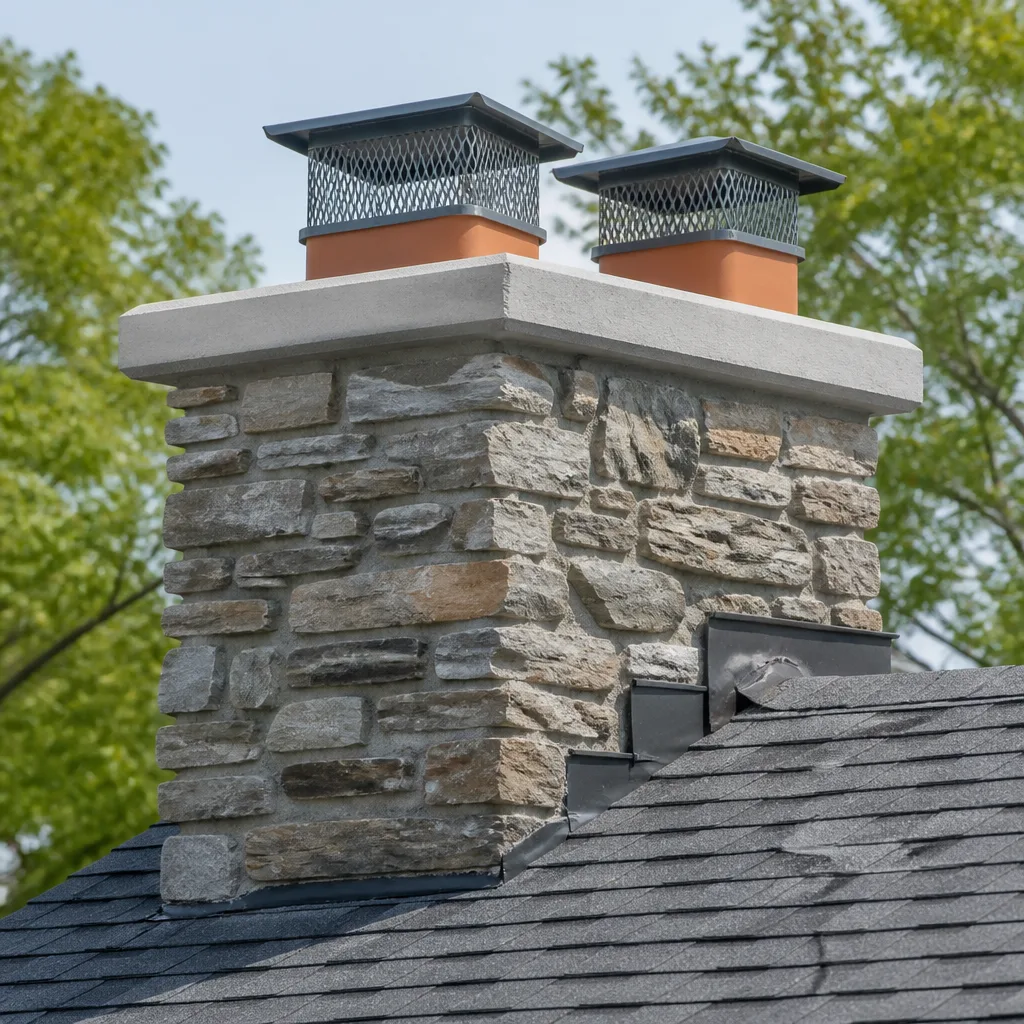
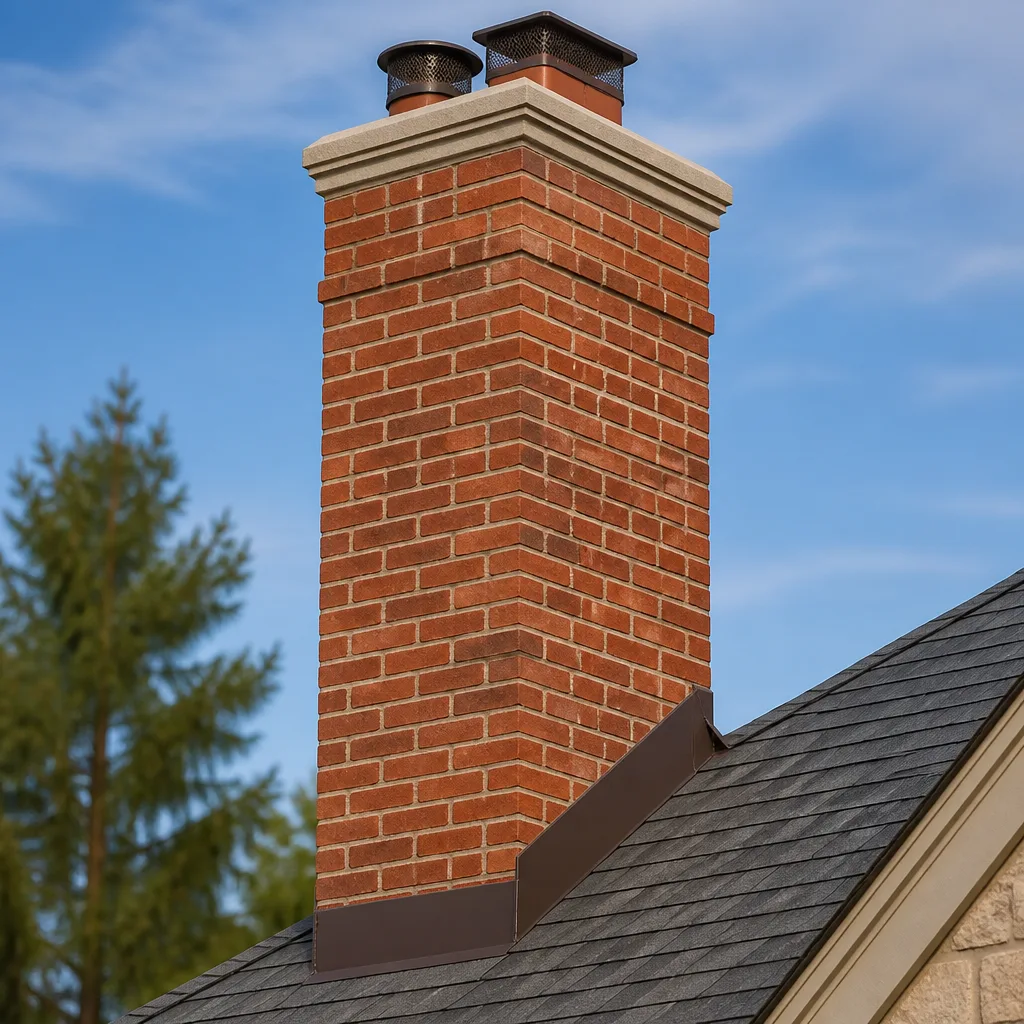
- Crown, cap, and flashing. Crown should shed water with positive slope; cap should have 5/8-inch mesh (wildlife-proof, not just spark-arresting); flashing should show intact seal at roofline without caulk patches hiding rust.
- Clearances to combustibles. Especially in homes with renovated basements or added built-ins, framing sometimes encroaches on required clearances. We measure and document.
Fall inspection with cleaning in Denver runs $220-$340 for a standard masonry fireplace, depending on roof access height and creosote severity. We deliver the written price before work starts, always. No exceptions. That’s Haven Standard Clause 1.
Winter: Reading the Signs Your Chimney Sends While Burning
Winter is not a maintenance season; it’s a monitoring season. The chimney is in use, and the signs it gives you are real-time diagnostic data. Knowing what to watch prevents the emergency call at 9 p.m. on a Saturday.
Signs that indicate immediate professional attention:
- Smoke entering the room on startup. This usually means cold air plug (solved by pre-warming the flue) or damper obstruction. If it persists past the first five minutes, stop burning and call.
- Visible creosote flakes in the firebox. These fall from the flue when buildup exceeds 1/8 inch. It means you’re due for cleaning, not that you can wait until spring.
- Downdraft on windy days. Common in Denver with our frontal wind patterns. A properly sized cap with wind-directional design (we specify Gelco and Famco models for exposed sites) often solves this. Persistent downdraft can indicate flue sizing mismatch or exterior chimney too short for pressure zone.
- Strong odor when not in use. Negative pressure in tight modern homes pulls air down the flue, bringing creosote smell. It often signals a need for top-sealing damper or outside air kit, not just cleaning.
- White residue on exterior brick below the crown. Efflorescence means water is moving through the masonry. In winter, that water freezes, expands, and accelerates spalling. Address in spring, but note it now.
In Ken-Caryl and Highlands Ranch, where newer construction tends toward tighter envelopes, we see more pressure-related draft issues than in older Denver neighborhoods with leakier homes. The solution is diagnostic, not guesswork: we use manometer readings and smoke pencil testing to identify pressure differentials, then specify the fix.
One winter reality: Denver’s inversions and high-pressure systems can stall flue draft even in properly built chimneys. A fire that drafted fine in October may struggle in January. This is weather, not defect, but the distinction requires measurement, not assumption.
Liner Materials and the Front Range Freeze-Thaw Problem
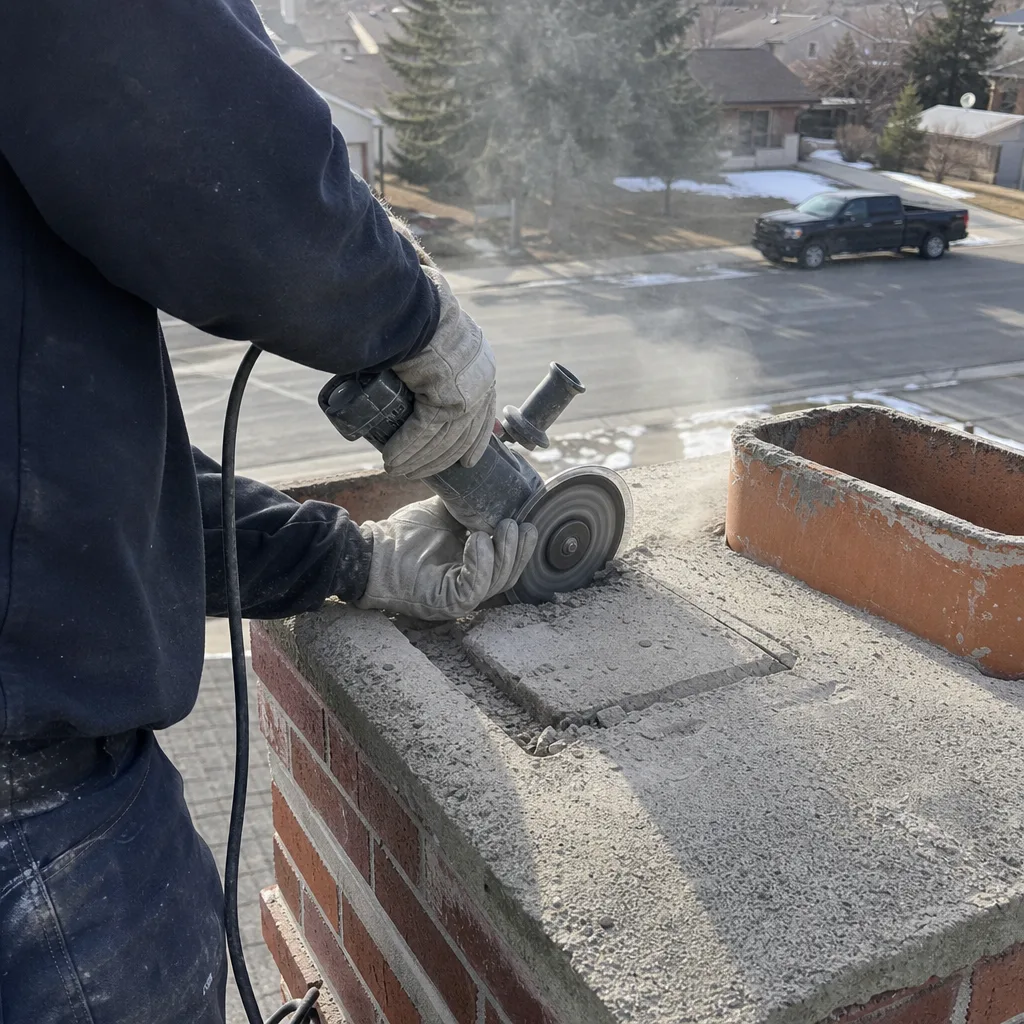
Denver’s freeze-thaw cycle is more severe than national averages suggest. We average 157 freeze-thaw days annually, with temperature swings of 30°F+ in 24 hours common in November and March. This thermal shock concentrates at the chimney top, where the liner is coldest and the masonry is thinnest.
Clay tile, the default liner in pre-1990 Denver homes, handles steady heat well but fails catastrophically under rapid temperature change. The tile face spalls (flakes off), the mortar between tiles cracks, and the resulting gaps allow combustion gases into chimney walls. We’ve replaced clay liners in Park Hill homes built in 1925 that failed after a single November cold snap following warm October use.
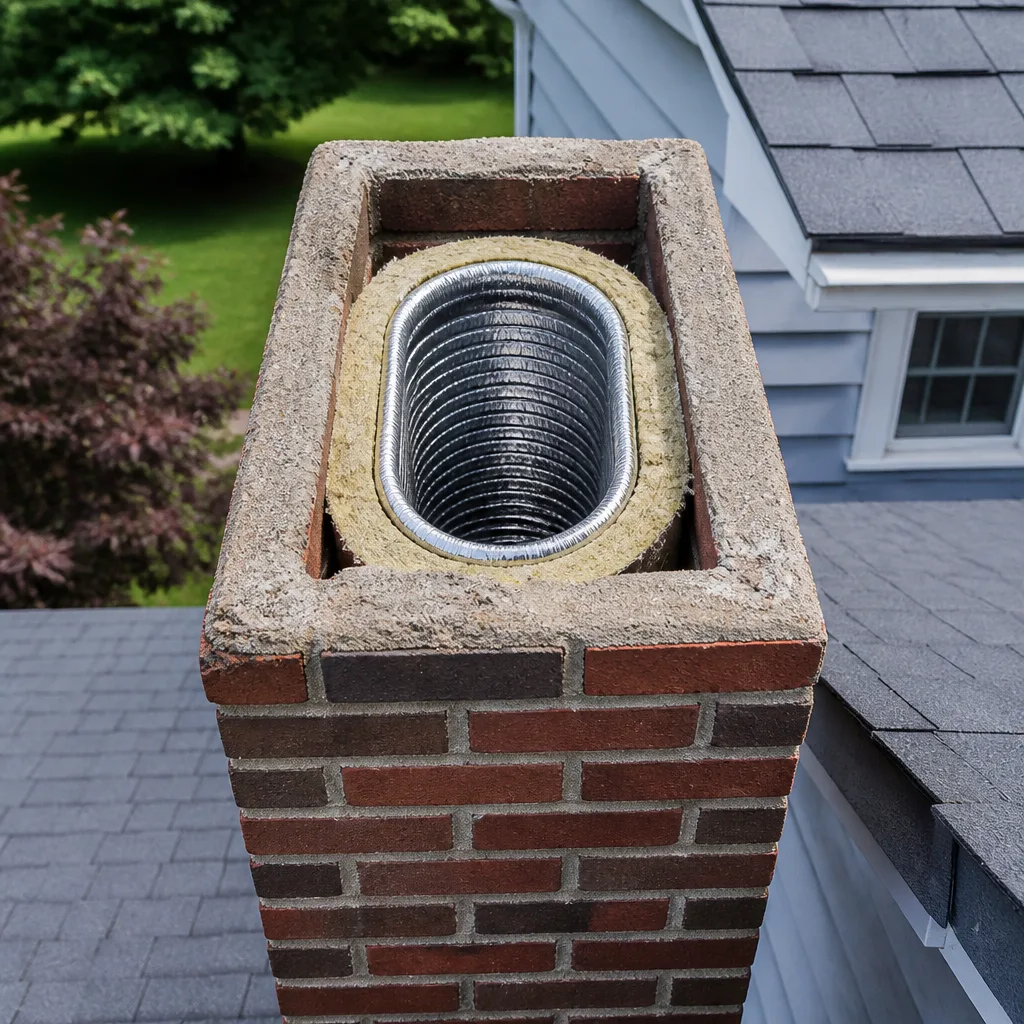
Stainless steel liners, typically 316Ti alloy for wood or AL29-4C for gas, flex with thermal expansion. We source DuraFlex and Olympia Chimney products through Haven’s buying network. Installation cost in Denver runs $2,800-$4,200 for a typical masonry fireplace, including insulation wrap required by code for reduced-clearance installations. The 365-Day Done Right Promise applies: if it’s not done right, we make it right.
Cast-in-place liners (HeatShield is the system we use) form a continuous ceramic bond to existing masonry. They’re ideal for chimneys with irregular dimensions or partial clay damage where full replacement is destructive. Curing requires controlled temperature; we schedule these in May-September for best results.
Material selection depends on what the camera shows, not what we prefer to install. The documented photo record from your inspection shows you exactly what we found and why we recommend what we recommend. Clause 4 of the Haven Standard requires this transparency.
What a Level 2 Inspection Actually Includes in Denver
NFPA 211 defines three inspection levels. Level 1 is visual, from accessible areas, without tools. Level 2 adds camera scan of the flue interior, accessible portions of the chimney exterior, and inspection of connected appliances. Level 3 involves demolition and is rarely needed.
Level Two Chimney Co. made Level 2 the default in 2009, years before insurers or regulators commonly required it. Here’s what happens on every visit:
- Exterior assessment. Crown, cap, brick condition, flashing, clearances. Photographed.
- Interior firebox and smoke chamber. Brick, mortar, damper operation, lintel condition. Photographed.
- Camera scan of flue interior. High-resolution video from firebox to crown, documenting liner condition, joints, obstructions, and creosote class/location. You receive the footage.
- Appliance connection and hearth inspection. Proper clearances, functioning components, evidence of prior overheating.
- Written report with findings, recommendations, and price. Delivered before any work beyond inspection begins. Haven Standard Clause 1.
The camera is the critical difference. A flashlight look at the firebox tells you nothing about the flue shoulder six feet up, where most clay tile failures start. In our 38,000+ inspections, we’ve found significant defects invisible from below in roughly 23% of chimneys whose owners believed they were “fine.”
We also provide a Free Second Opinion on any written estimate from another company. Bring us their scope and price; we’ll review it against what our camera shows in your flue. No charge, no obligation.
Costs and Scheduling: Denver-Specific Pricing
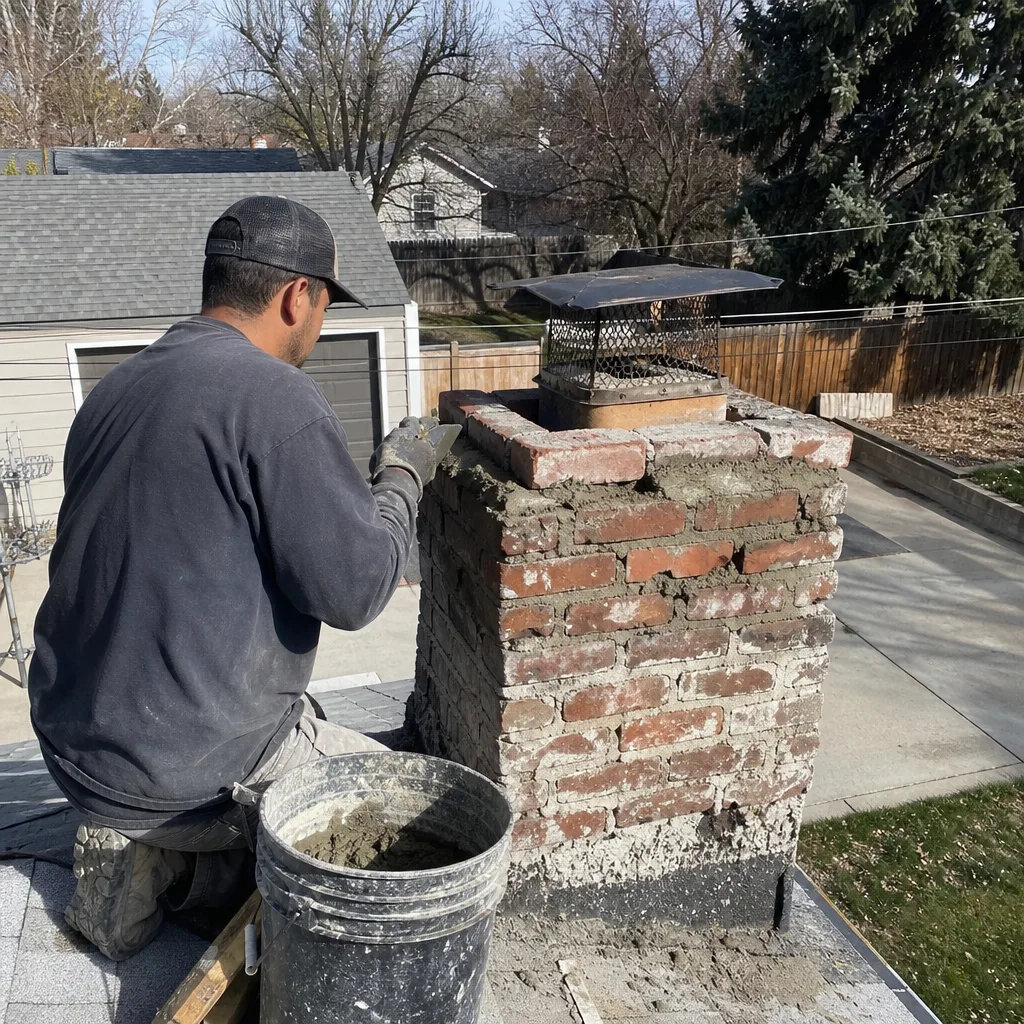
Chimney service pricing in Denver reflects roof access difficulty, flue configuration, and the actual condition found. We publish ranges because “call for a quote” contradicts everything the Haven Standard stands for.
| Service | Denver Price Range | What’s Included |
|---|---|---|
| Level 2 inspection with cleaning (standard masonry fireplace) | $180-$320 | Camera scan, photo record, sweep, written report |
| Level 2 inspection with cleaning (insert or stove) | $220-$380 | Includes appliance disconnect/reconnect, gasket check |
| Cap and crown inspection (standalone) | $120-$180 | Condition assessment, photos, replacement recommendation if needed |
| Stainless steel liner installation | $2,800-$4,200 | DuraFlex or Olympia Chimney product, insulation, connection, documentation |
| Crown rebuild or seal | $650-$1,400 | Formed concrete rebuild or flexible sealant application |
| Smoke chamber parging (HeatShield) | $1,200-$2,100 | Resurfacing to NFPA 211 smoothness standard |
Scheduling follows the calendar we described. April-May and September-October are peak demand; book 3-4 weeks ahead. June-August and December-January have better availability and often lower urgency pricing. Emergency calls for blocked flues or suspected carbon monoxide issues are answered live 24/7, but the rate reflects after-hours dispatch.
We serve all Denver neighborhoods including Stapleton, Cherry Creek, Hilltop, Park Hill, Montclair, Glendale, Baker, West Highland, Berkeley, Crestwood, and surrounding metro areas.
Common Mistakes to Avoid
- Waiting for “fall cleaning” after you’ve already burned. In Denver, first fires happen in September. National advice hasn’t caught up. Inspect before first fire, or inspect in spring after last fire.
- Hiring based on lowest price without camera documentation. A $99 sweep with no photo record leaves you with no evidence of what was or wasn’t found. We’ve been called to repair damage from “clean” chimneys that were never properly inspected.
- Ignoring the cap because “it looks fine from the ground.” Cap mesh corrodes, hoods detach in wind, and animals pry loose corners. Ground inspection misses this; roof-level photos don’t.
- Assuming a newer home has a proper liner. Denver’s building boom 2015-2025 included homes with unlined factory-built chimneys or improper connector pipes. Age of house does not equal code compliance.
- Burning green or unseasoned wood “because it’s cheaper.” In our dry climate, even “seasoned” wood often arrives at 25%+ moisture. Buy from Denver-area suppliers who store under cover, or invest in a moisture meter. Wet wood produces Class III creosote at 3x the rate of properly dried hardwood.
- Skipping inspection after a chimney fire. Even a “small” chimney fire (popping sounds, dense smoke, hot exterior brick) cracks clay tile and damages mortar. The chimney may look fine and fail dangerously next season. Always inspect after any suspected fire event.
- Using the fireplace as a furnace substitute during outages. Extended high-temp burning stresses liners beyond design. If you’re relying on wood heat, you need more frequent inspection, not the standard annual cycle.
When to Call a Professional
Call before the situation becomes urgent. Specific triggers: visible creosote flakes in the firebox, smoke entering the room on startup, white efflorescence on exterior brick, a damper that won’t fully open or close, any odor of creosote when the fireplace is not in use, or if your chimney has not had a camera-scan inspection in over 12 months. After any chimney fire, even suspected, inspection is non-negotiable before next use. Carbon monoxide detectors that alarm near the fireplace require immediate professional evaluation; do not burn until cleared.
Level Two Chimney Denver offers free estimates in Denver - call (720) 674-7312. Every estimate includes the camera scan, the photo record, and the written price before work starts. Live phone support runs 24 hours a day, 7 days a week. Background-checked, uniformed technicians; license information displayed on every page; named tech assigned with text notification when en route.
Frequently Asked Questions
A Level 2 chimney inspection with cleaning in Denver typically costs $180-$320 for a standard masonry fireplace, and $220-$380 for a fireplace insert or wood stove. The price includes the camera-scan inspection, documented photo record, sweep, and written report. We deliver the written price before any work begins. Call (720) 674-7312 for an exact quote - estimates are free.
NFPA 211 recommends annual inspection for all chimneys, and cleaning when creosote exceeds 1/8 inch. In Denver’s four-season burn climate, many homeowners benefit from inspection twice yearly: after the last spring fire and before the first fall fire. Heavy users (more than three fires weekly in season) may need cleaning mid-season. The camera scan determines actual need rather than calendar guessing.
You need a new liner when the camera shows cracked, spalled, or gapped clay tile; corrosion holes in metal; or delamination in cast-in-place systems. We never recommend liner replacement without photo evidence you can see for yourself. Some conditions allow monitored waiting; others require immediate action due to carbon monoxide risk or fire hazard. The documented photo record shows you exactly which category your chimney falls into. Free second opinions on any written estimate are always available.
Skipped cleaning allows creosote to accumulate beyond 1/8 inch, at which point it becomes a combustible hazard. Chimney fires start at 1,000°F and can reach 2,000°F, cracking liners and igniting adjacent framing. Even without fire, blocked or damaged flues vent carbon monoxide into living space. In Denver’s tight new construction, this risk is elevated because negative house pressure pulls combustion gases backward. The cost of prevention is a fraction of the cost of remediation.
Denver’s elevation increases draft and combustion intensity; our dry climate hardens creosote faster; our summer monsoons drive moisture into uncapped flues; and our freeze-thaw cycle starts earlier and hits harder than national averages. Generic “fall cleaning” advice assumes a single heating season and moderate climate. Denver has two shoulder burn seasons, severe freeze-thaw, and moisture intrusion that national guides don’t address.
Level 1 is visual inspection from accessible areas without tools. Level 2 adds a camera scan of the flue interior, inspection of accessible exterior portions, and evaluation of connected appliances. Level 2 is what we perform on every visit; it’s the standard that reveals what flashlight inspections miss. Clause 4 of the Haven Standard requires the documented photo record that only camera inspection can provide.
The Bottom Line
Denver’s chimney calendar has four seasons, not two. Spring cleaning after your last fire gives fresher diagnostics and easier creosote removal. Summer cap-and-crown inspection prevents monsoon moisture from becoming November freeze-thaw damage. Fall confirmation checks catch what summer hid. Winter monitoring reads real-time signals before they become emergencies. The homeowners who avoid emergency calls are the ones who stopped following national “fall cleaning” advice and started matching maintenance to Denver’s actual climate. Camera documentation, written prices before work starts, and a documented record on every visit are not extras; they’re the minimum standard for knowing what you have and what it costs to keep it safe. Explore more guides & resources to stay informed year-round.
Written by Corrine Halstead, Owner at Level Two Chimney Denver, serving Denver since 2009.